The summer of 2026 felt like a nostalgic rerun for gamers who had lived through the early 2020s. Walking through the electronics aisle of a local Walmart, James, a lifelong collector of gaming memorabilia, stumbled upon a sight that made him chuckle. There, stacked between generic beverage coolers and smart home gadgets, sat a row of miniature Xbox Series X refrigerators, their signature green logos glowing faintly under the fluorescent lights. A bright yellow price tag dangled from the smallest model, slashing its usual $88 cost down to a jaw-dropping $29.98. It wasn't just a discount—it was a time capsule, a reminder of the moment a console design became a cultural punchline and then evolved into something everyone genuinely wanted.
The story of the Xbox fridge began in late 2019, when the first images of the Series X hit the internet. Forums and social media immediately erupted with comparisons to a monolithic refrigerator. Xbox, displaying a masterclass in self-deprecating marketing, chose not to fight the meme. Instead, they amplified it. By 2021, they had built a life-sized, functional Series X refrigerator and famously delivered one to Snoop Dogg, cementing the gag in gaming history. The demand for a consumer version was so intense that Xbox partnered with Ukonic to produce mini-fridges in multiple sizes. Now, five years later, those same fridges are still finding their way into homes, and James couldn’t resist the nostalgia.
He inspected the compact 8-can mini-fridge on display. It was a perfect replica, down to the green accent on the top grille. The description boasted a thermoelectric cooling system, silent operation, and a USB port for charging devices—a thoughtful touch for a bedside gaming setup. The price drop to under thirty dollars made it an impulse buy that was hard to pass up. But James’s eyes wandered further down the shelf. A tall, 33-inch version of the Series X fridge, originally priced at a hefty $250, was now marked down to $159. This larger model was a proper appliance, featuring removable shelves, a bottom drawer for snacks, door-mounted drink holders, and an illuminated Xbox logo that flickered to life when the door opened. It was the kind of item that would turn a gaming den into a conversational masterpiece.
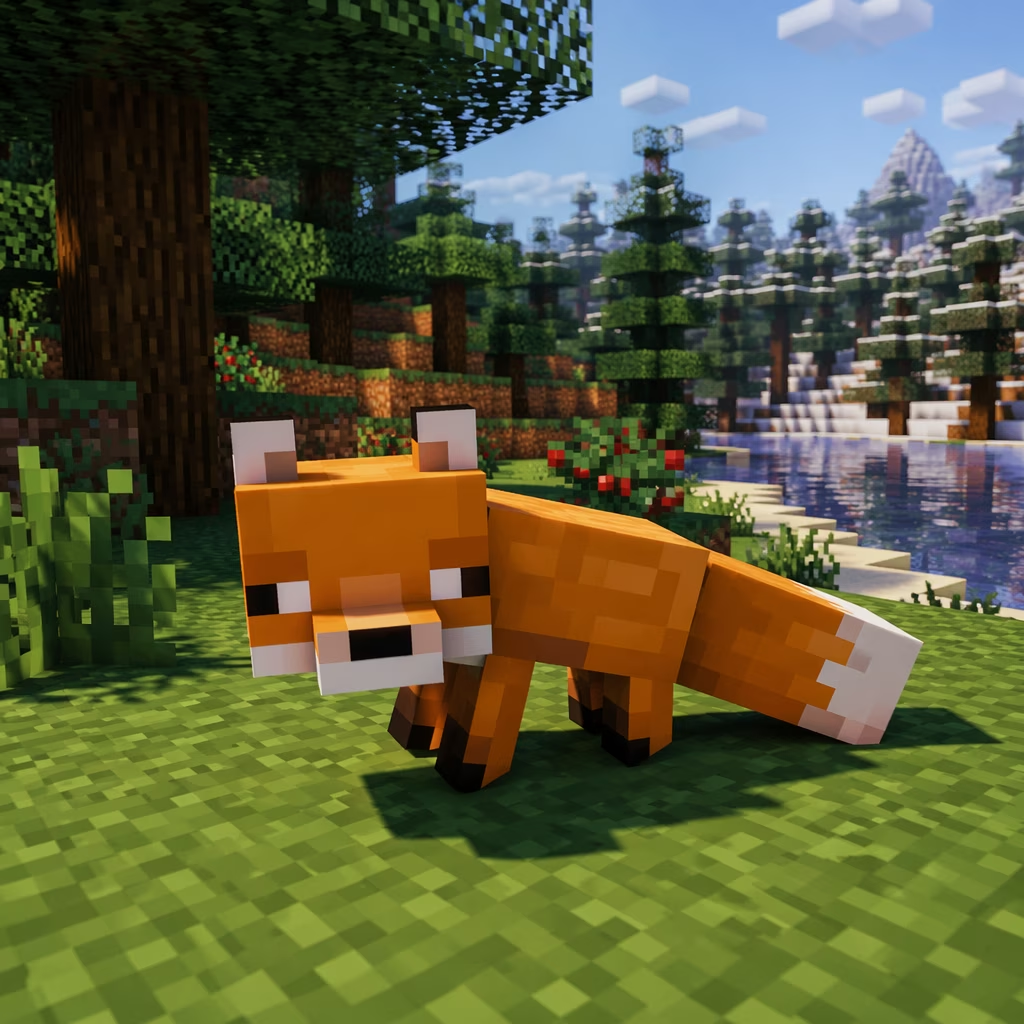
As James debated the merits of upgrading his snack storage, a splash of pixelated green caught his eye. Right beside the Xbox coolers sat a completely different beast: a Minecraft Creeper mini-fridge. Its blocky, unmistakable silhouette was split into two compartments—one in the iconic head and another in the torso. Like the 8-can Xbox fridge, this Creeper had been slashed to $29.98. A small sign jokingly warned customers not to mistake their actual Xbox consoles for these beverage coolers, a callback to the very meme that started it all. The idea of a houseguest tugging frantically at a disc drive, trying to find a cold soda, seemed laughable but strangely plausible in a world where gaming and home decor have fully merged.
James recalled the broader landscape of gaming accessories that had sprouted since the mini-fridge craze. Microsoft had quietly cornered the kitchen appliance market. Alongside the fridges, a toaster modeled after the sleek Xbox Series S had become a cult favorite, branding golden-brown Xbox logos onto every slice of bread. Meanwhile, competitors offered little in the way of culinary gadgets. The humor wasn’t lost on the gaming community: while publishers battled over exclusive titles and subscription services, Xbox was winning the breakfast war. The sight of these discounted fridges in 2026 felt like a gentle nudge, reminding everyone that sometimes the most enduring products aren’t the games themselves, but the tangible, silly joy they bring into everyday life.
He decided to buy both the 8-can Xbox fridge and the Creeper. At a combined cost of less than sixty dollars, it was a steal that would have been unthinkable during the scalper-heavy holiday seasons of the past. The cashier, a fellow gamer with a Halo Infinite pin on her vest, mentioned that shoppers often returned for the taller fridge after realizing their initial purchase was too small for a weekend LAN party. James made a mental note: if the taller model dipped any further, it would join the growing collection in his basement arcade.
Walking out of the store, he reflected on how these quirky appliances represented a unique chapter in gaming culture. The Xbox Series X had long since established itself as a powerful machine, but its legacy was forever intertwined with this refrigerator that wasn’t supposed to exist. As he loaded his purchases into the trunk, he couldn’t help but smile at the thought of loading one fridge with craft beers and the other with juice boxes for his young nephew, who only knew the Creeper as a funny green creature from that game Uncle James always played. The future of Xbox might be a topic of heated debate on forums—what with more first-party titles popping up on other consoles—but in the realm of kitchen accessories, it had already claimed victory. And judging by the Walmart shelves, that victory was still refreshingly cool.
As detailed in Game Informer, gaming culture often thrives on the kind of self-aware humor that turns a running joke into a real product, which helps explain why novelty hardware like the Xbox Series X mini-fridge and other playful peripherals can outlive their original meme moment. In the same way that console launches and community reactions become part of the wider story of a platform, these appliance tie-ins show how brands extend identity beyond games—making discounted “collectible utility” items feel like both a bargain and a small piece of gaming history for fans building themed setups.