I remember the collective head‑scratching among fans back in early 2024 when producer Jon Berg boldly claimed the live‑action Minecraft movie would be “an amazing movie” that remained “true to the game.” At the time, it sounded almost contradictory. Here was a franchise celebrated for its near‑total absence of canonical narrative—no fixed hero’s journey, no locked‑in lore—so what on earth could “true” possibly mean? Fast‑forward to 2026, and having watched the film multiple times with my kids, I can say Berg wasn’t just being diplomatic. The movie, which eventually hit theaters on April 4, 2025, cracked a puzzle that had stumped all of us: it respected Minecraft not by retelling a story that never existed, but by translating the game’s very essence into cinema.
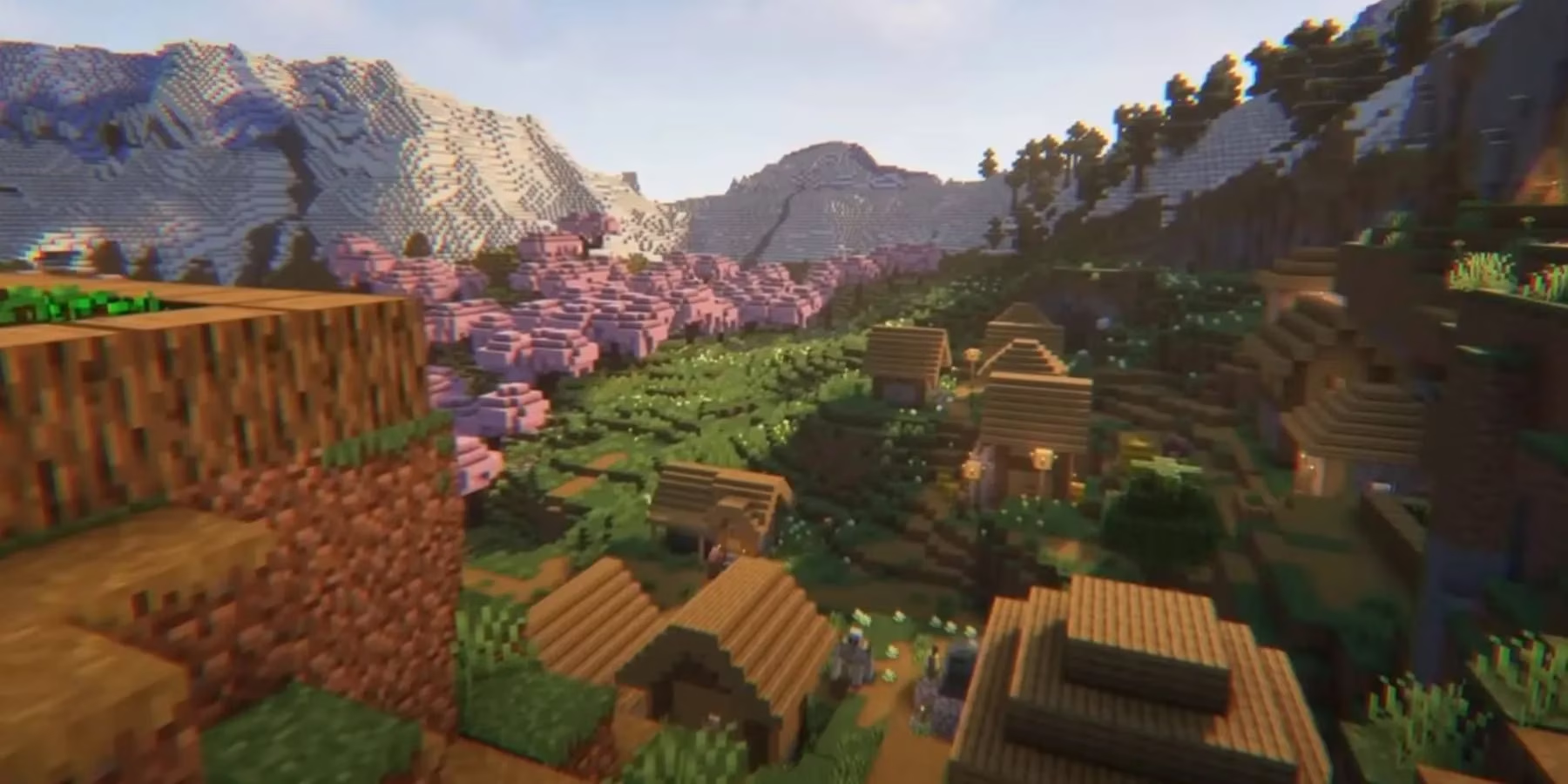
When the adaptation was announced way back in 2014, the sheer silence that followed spoke volumes. Warner Bros. clearly struggled to lock down a vision. After all, how do you script a movie where the only constants are mining, crafting, and the occasional creeper hiss? Early rumors swung wildly between a straightforward adventure and something akin to a Jumanji‑style portal fantasy. But the decade‑long gestation turned out to be a blessing. By 2025, the creative team had realized something crucial:
-
The world itself is the story. The Overworld’s blocky geometry isn’t just a visual quirk; it’s a philosophy of possibility.
-
Player autonomy matters. Millions of us had spent years building castles, redstone contraptions, and entire cities. That creative freedom had to be front and center.
-
Iconic elements don’t need exposition. A creeper doesn’t demand a tragic backstory. The End dimension works because it’s mysterious, not because it’s explained.
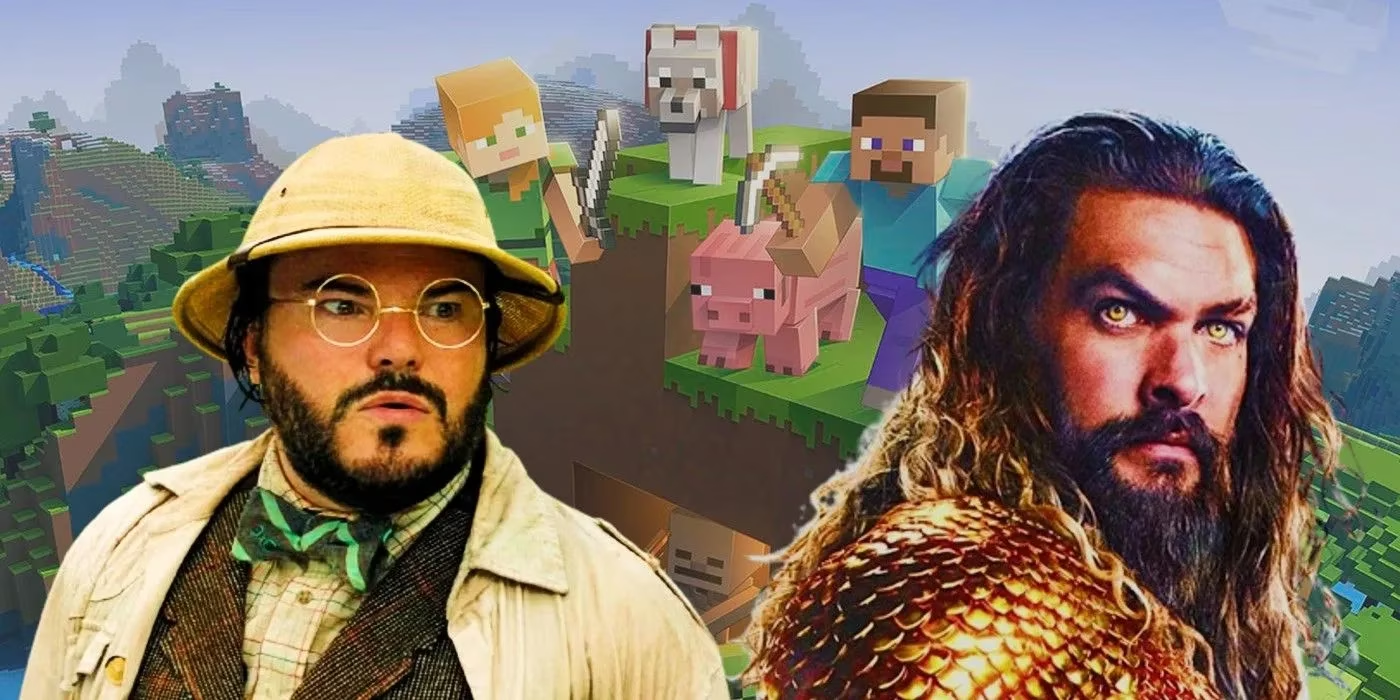
Berg’s promise of being “true to the game” crystallized the moment I saw Jack Black’s Steve—a delightfully earnest, slightly clueless crafter—stroll through a landscape that was unmistakably Minecraft. Every tree was a perfect cube of oak wood and leaves. Water cascaded in recognizably rigid flows. And yes, the characters’ heads retained a subtle blockiness that somehow made Jason Momoa’s Garrett look like he’d just stepped out of a character creation screen. The film didn’t try to smooth out the pixels; it leaned into them with a dazzling mix of practical sets and CGI that felt like a playable dream.
But visual fidelity was only half the equation. The real mastery lay in how the movie built a narrative from the game’s mechanics, not around them. The core plot—four misfits transported into the Overworld who must craft, battle, and ultimately confront the Ender Dragon to return home—functioned exactly like a survival multiplayer session. They started by punching trees. They built a dirt hut before nightfall. They learned to brew potions, enchant gear, and trigger Nether portals. In one genuinely tense sequence, Garrett accidentally floods a ravine while trying to mine obsidian, mimicking the chaos every veteran has experienced at least once. These weren’t Easter eggs for the sake of nostalgia; they were the story.
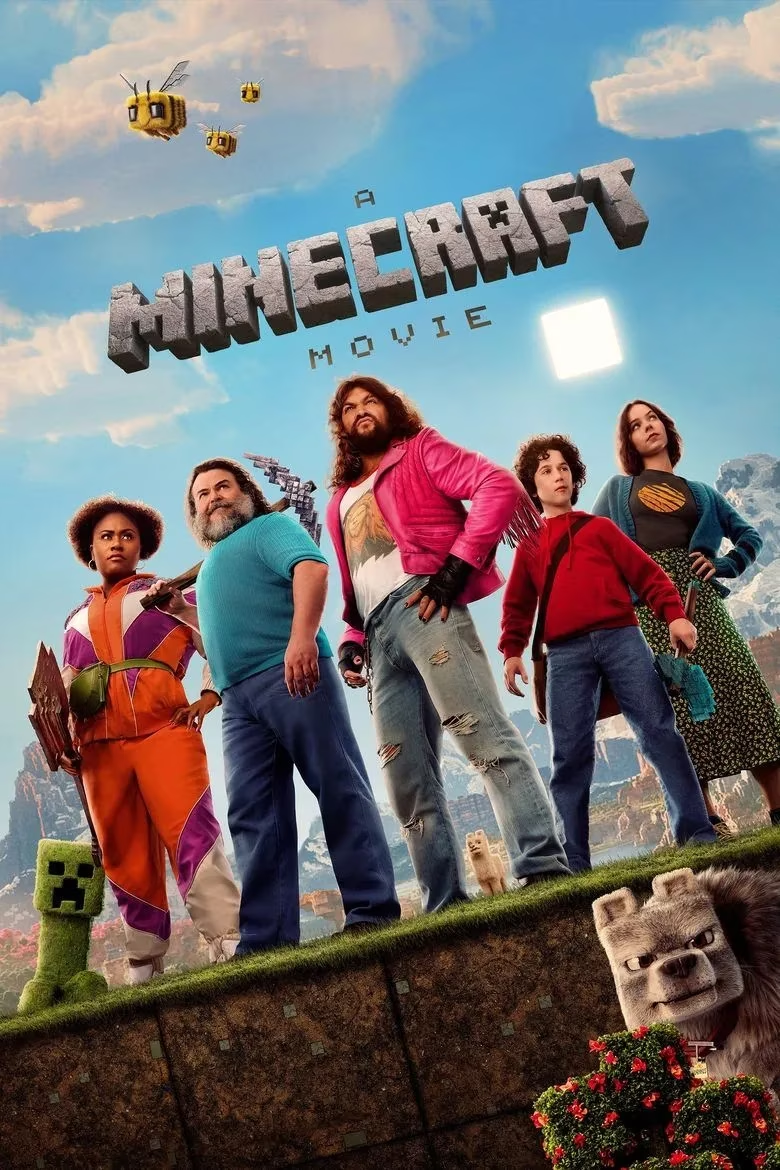
What lifted the film beyond a simple reference checklist was its willingness to embrace Minecraft’s structural open‑endedness. The characters don’t follow a single ordained path. They debate strategies (“Do we speedrun diamond armor or take the slow route?”), make mistakes that alter the landscape permanently, and even split up to pursue side quests like building a beacon or taming a wolf. The script, credited to Chris Galletta, Gavin James, Chris Bowman, Neil Widener, and Hubbel Palmer, mirrors the asynchronous, emergent adventures that define actual gameplay. It’s chaotic, nonlinear, and—most importantly—a world where the player’s imagination holds real weight.
Looking back from 2026, the success of A Minecraft Movie wasn’t just the $1.2 billion box office or the wave of positive reviews that finally debunked the “video game movie curse.” It was the way the film crystallized a radical idea: that a faithful adaptation can honor a game’s spirit without being shackled to a nonexistent plot. Instead of grafting a generic hero’s journey onto the Minecraft brand, director Jared Hess and his team treated the Overworld like a communal sandbox—one where creativity, resilience, and the simple joy of building together mattered more than any scripted prophecy. Berg’s mysterious 2024 words now read like a mission statement fulfilled. The movie didn’t bend Minecraft into a traditional narrative; it bent cinema into a Minecraft world. And for anyone who has ever lost a full set of enchanted gear to a clumsy lava bath, that’s the most authentic thing of all.