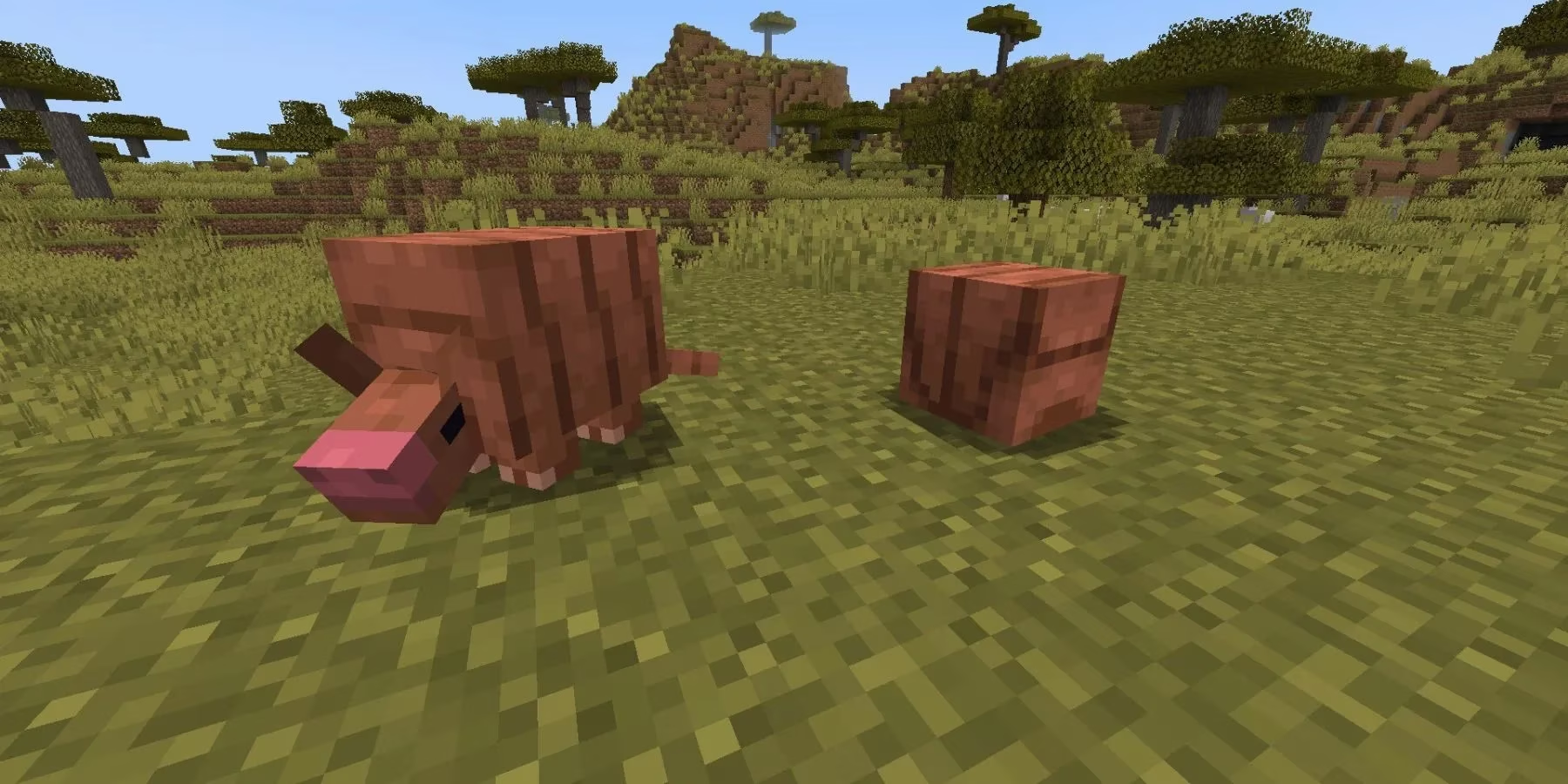
I still remember the 2023 mob vote chaos. I voted armadillo. By the time Minecraft 1.21 finally landed, I rushed to a savanna, found a shy armadillo, and farmed scute until I could craft wolf armor for my pack. In 2026, that moment still feels great—but the more I play, the more I realize the armadillo is part of a bigger design pattern that keeps bothering me.
Why I Wanted Armadillos to Win
The armadillo fought a hard-won battle for its place in Minecraft. It finished first in the community’s 2023 mob vote, beating the crab and the penguin. I won’t lie: the armadillo’s cute exterior helped. But the bigger reason was its advertised mechanic. The armadillo drops scute, and scute can be used to craft wolf armor. As someone who has lost tamed wolves to lava, skeletons, and bad decisions, the idea of protecting my furry friends felt urgent.
The crab’s extended reach for building and the penguin’s boat speed boost were cool, but they felt like convenience upgrades. Wolf armor felt like love. I wanted my pack to survive a creeper blast. I still think that was a reasonable reason to vote.
The Problem With a One-Trick Mob
Here is where my enthusiasm cooled. The problem is not wolf armor itself. The problem is that the armadillo’s entire pitch centered on one craft. After I made a few sets of wolf armor, the armadillo faded into the background of my survival world. It rolls up when startled, it wanders the savanna, and it occasionally drops scute—but it does not meaningfully interact with combat, farming, brewing, redstone, or exploration beyond that single armor recipe.
Older mobs feel like they belong to a living ecosystem. Newer mobs, including many from mob votes, often feel like one-trick ponies. I noticed this pattern after The Nether Update introduced hoglins and piglins, which occupy a space full of unique interactions, bartering, hunting, and biome-specific behavior. Everything after that has been hit or miss.
Old Mobs Still Outclass the New Ones
Take the humble spider. It is one of Minecraft’s oldest mobs, and it still has more going on than most creatures added in the last few years.
-
🕷️ It has less health than zombies, skeletons, or creepers, but its smaller body helps it squeeze through tight spaces.
-
🕷️ It is slightly faster than many hostile mobs and attacks with a pounce.
-
🕷️ It can climb walls, making it a threat even inside supposedly safe bases.
-
🕷️ It turns neutral during the day, which adds a subtle day-night rhythm.
When slain, a spider drops two useful things: string and spider eyes. String is essential for wool, bows, fishing rods, scaffolding, and more. Spider eyes can be eaten in an emergency, but they also combine with sugar and brown mushrooms to make a fermented spider eye. That item is then brewed into Potions of Weakness, which are a key step in curing zombie villagers. Every part of the spider connects to something else.
Compare that to a slate of newer mobs:
| Mob | What It Does | How Deeply It Connects |
|---|---|---|
| 🦑 Glow Squid | Slight sparkling effect; drops glowing ink sac | Brightens signs and item frames; does not actually glow |
| 🌱 Sniffer | Can unearth two seeds after a long process | Grows flowers with mostly aesthetic value |
| 🐐 Goat | Leaps and rams; drops a horn | Horn only makes a noise |
| 🐼 Polar Bear/Panda | Ambient behavior | No unique drops or useful behaviors |
None of these are bad on their own. A sniffer is adorable. A goat ramming me off a cliff is hilarious. But after the novelty wears off, I rarely seek them out.
A Pattern Since The Nether Update
The Nether Update, version 1.16, raised my expectations. Hoglins and piglins are not just mobs; they are part of an economy. Piglins barter, hoglins provide food but are dangerous, and the whole Bastion Remnant ecosystem feels connected to survival progression. Since then, many additions have not deepened existing systems. They introduce a new idea and stop there.
Glow squids act like normal squids with a visual effect. Their glowing ink sac is useful for making signs and item frames brighter, but it does not add much beyond aesthetics. The sniffer’s ancient seeds grow into flowers that mostly give dyes we could already get more simply. The goat’s horn is fun for a moment, but sound alone is not enough. Pandas and polar bears, though they arrived before the Nether Update, have the same shallow problem: no unique drops and no real behavioral payoff.
This creates a game that feels less holistic. A mob like the spider connects to brewing and farming through its eyes and string. A mob like the armadillo connects to wolf armor only. When I explore a savanna in 2026, I see a cute armadillo, but I do not see a system.
What I Want From Future Mobs
There are signs Mojang understands this. Recent changes to Minecraft’s bat show they are willing to revisit old mobs and give them more presence. That gives me hope. But for future creatures, I want Mojang to look at upcoming mobs from the perspective of what already exists.
If a new mob drops something, it should connect to brewing, redstone, enchanting, farming, or combat in a meaningful way. If it has a behavior, that behavior should change how I build, travel, or survive. Cuteness can be a good reason to vote, but it cannot be the only reason a mob matters.
I still wear my wolf armor with pride. I still like the armadillo. But my hope for Minecraft’s future is not just more adorable mobs—it is more mobs that make the game feel like one connected world again.