There’s something magical about logging back into a game you haven’t touched for a week—only to discover the world has changed without you. Maybe your factory in the wilderness has been raided, your spaceship docked in a station you don’t remember visiting, or the economy has shifted so much that your stash of rare minerals is suddenly worth a fortune. That’s the pull of persistent universes, and honestly, it’s why I keep coming back to them.
So, what do I mean by a persistent universe? It’s not just a big map with lots of players. I’m talking about game worlds that keep ticking when you’re offline. Servers don’t reset every match; the city you helped build, the war you started, even the items you dropped on a random planet can have consequences hours or days later. It’s chaotic, it’s messy, and it creates stories you never planned. In 2026, after nearly two decades of experimenting with this idea, some games have truly mastered the feeling of living in a second world.
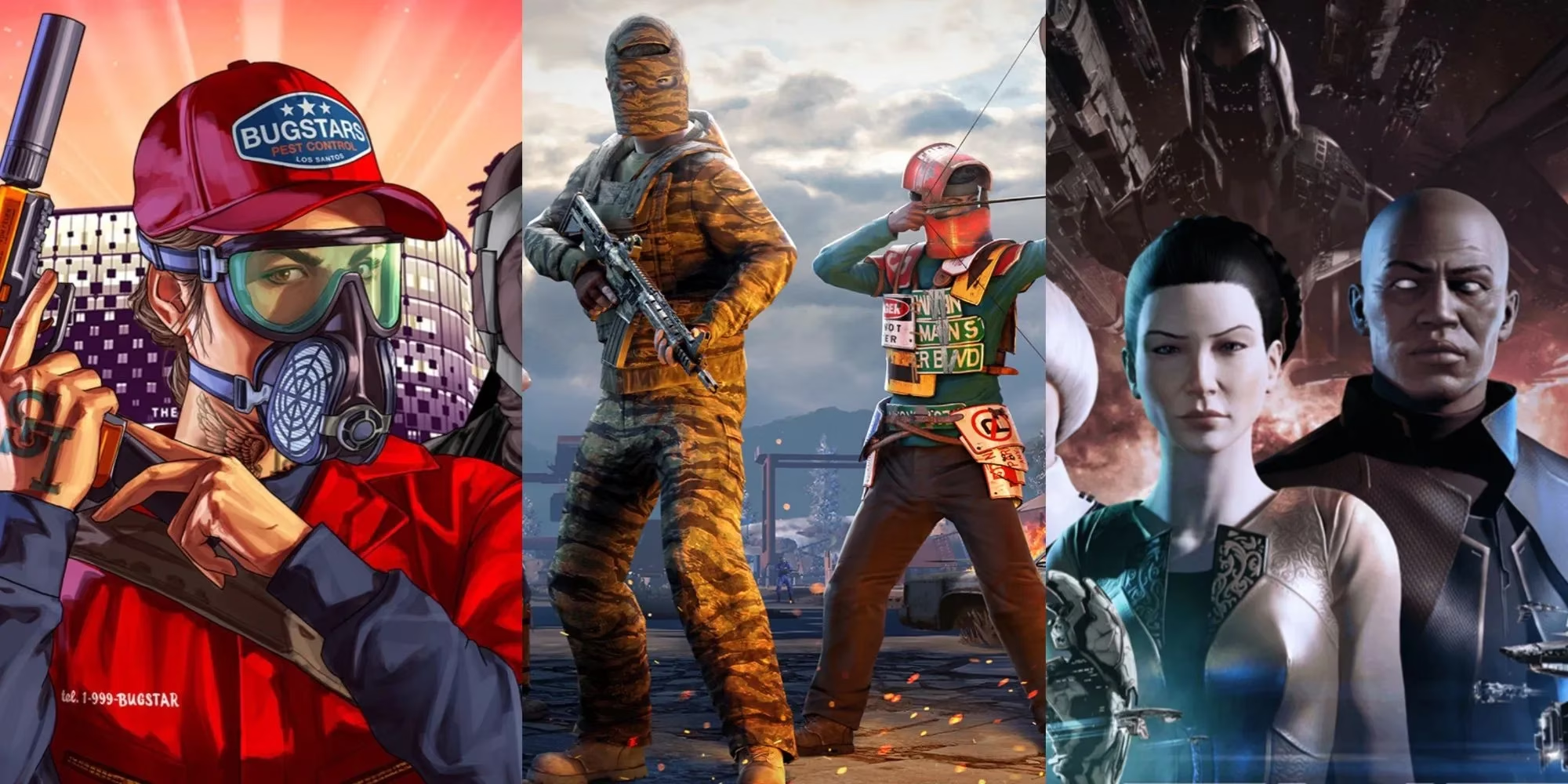
Let’s talk about Grand Theft Auto Online. I know, you probably think of it as the chaotic sandbox where your cousin blows up your car for the tenth time. But GTA Online has evolved into something much more subtle. Rockstar kept adding layers to the world long after launch. In 2025, they introduced a massive stock market overhaul that made corporate sabotage a real career path. Now, with dedicated crews controlling supply chains, the game’s economy genuinely reacts. I once spent a whole weekend destroying a rival company’s delivery planes just to tank their stock value. It felt dirty, but the credits rolled in. And then there are the roleplay servers—NoPixel being the king—where I’ve spent hundreds of hours living a completely different life. In those servers, your character has a job, a reputation, and enemies who remember you. The whole world persists even when you’re fast asleep, and waking up to find your business burned down because you crossed the wrong person is both terrifying and thrilling.
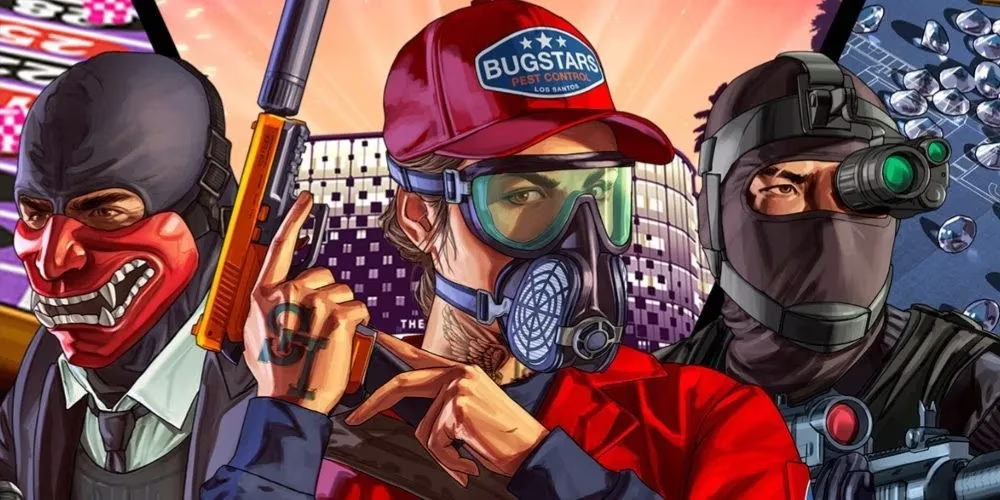
Then you have the survival genre, which took the persistent universe idea and made it brutally personal. Conan Exiles threw me into an exile’s sandbox where the very walls I built would decay if I stayed away too long. I remember returning after a two-month break in 2026 to find my desert fortress had crumbled into dust—not because someone attacked it, but because I neglected it. That’s a harsh lesson: your possessions have a lifespan even without enemy interference. On PvP servers, raiding windows kept the chaos contained to prime time, but the tension never really left. I once spent three days reinforcing a mountain base, only to log in one evening and see a gaping hole where my gate used to be. I’d been hit during the allowed hours. It stung, but it also made rebuilding feel like a genuine accomplishment.
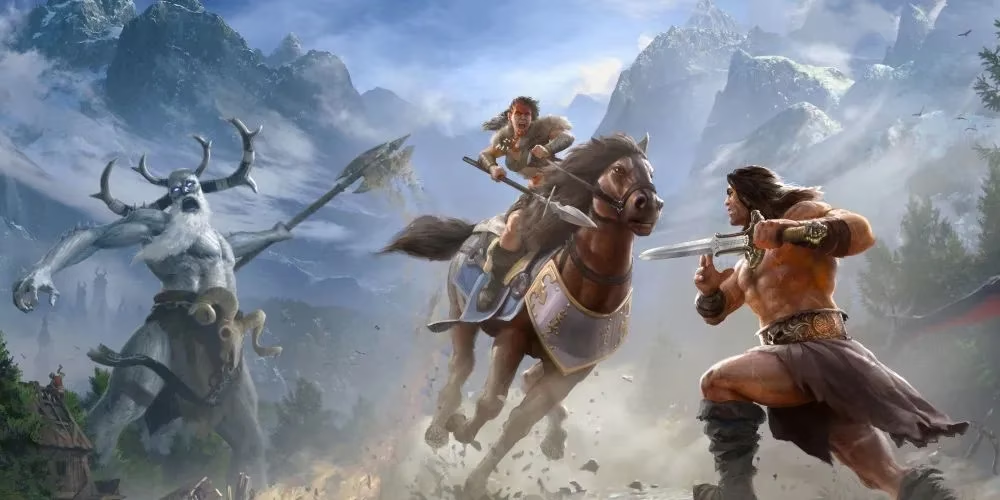
Rust takes that brutality and dials it up to eleven. Here, everything you craft stays in the world until someone burns it down—and someone almost always will. Temporary servers with monthly wipes keep things fresh, but within those weeks, alliances form and betrayals sting. I joined a small group last spring, and for a glorious five days we controlled a valley. Then a larger clan rolled through with rockets and laughter. My home persisted without me for about twenty minutes after I logged off that night. That’s the Rust experience: a persistent world in theory, but a memory in practice. Yet it’s that danger that makes every deer you hunt and every sheet metal door you craft feel meaningful.
And then there’s the pioneer of them all: Minecraft . It’s easy to forget that with the right server settings, this blocky paradise is one of the purest persistent universes you can inhabit. I run a private server with friends that has been running without a reset since late 2024. We’ve built towns, carved out underground rail networks, and accidentally flooded a village with a poorly planned dam. Even when nobody is online, the crops grow, the villagers gossip, and the redstone machines hum along. That’s a special kind of persistence—gentle, creative, and entirely ours. On public PvP servers, the experience flips. The map remembers every crater from TNT wars, and that mountain that disappeared last month? Someone mined it for resources while you were sleeping.
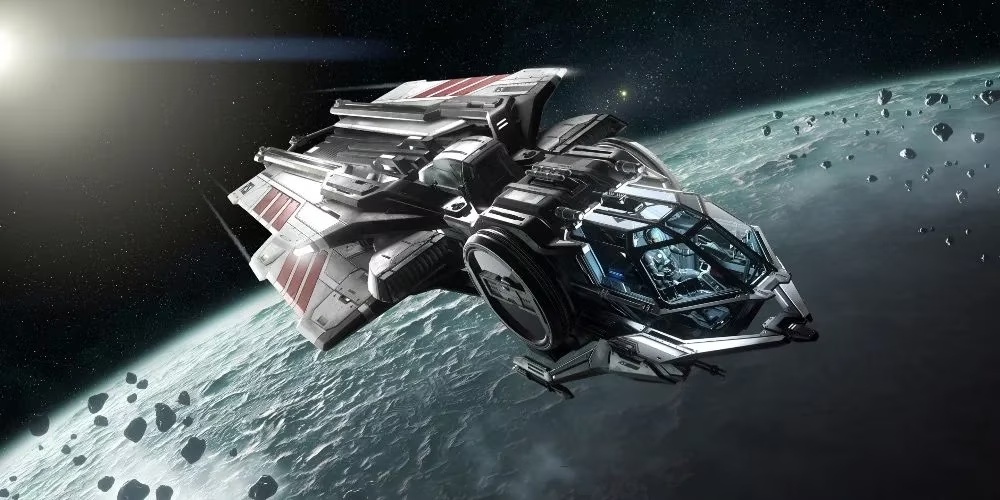
Now, when I think about ambition, Star Citizen immediately comes to mind. Still in active development in 2026—and yes, I know the jokes—it’s delivering moments of pure sci-fi immersion that nothing else matches. I’ve taken a multi-hour journey from a spaceport to a distant moon, mined some Quantanium, and then had my cargo ship explode because I quantum-traveled too close to a debris field. That loss hurt in a very real way, because the credits I’d grinded for days were tied up in that ore. The universe doesn’t pause for anyone. Ships persist in hangars, bounties remain on your head between sessions, and the galactic economy shudders with every major player action. Recently, a new dynamic event involving a Vanduul incursion caused widespread trade route disruptions, and I was stuck for a week in a backwater station. Annoying? Yes. Incredible storytelling? Absolutely.
I have to pay respects to the past, too. Avalon: The Legend Lives was a text-based MUD that began in 1989 and only closed its servers in 2023. I played it briefly in my college years, and even through simple text, I felt the weight of history. Its player-driven economy, virtual bank, and housing system laid the groundwork for everything we love today. In Avalon, a merchant’s legacy could outlast the player himself. It was the first persistent world I ever truly believed in.
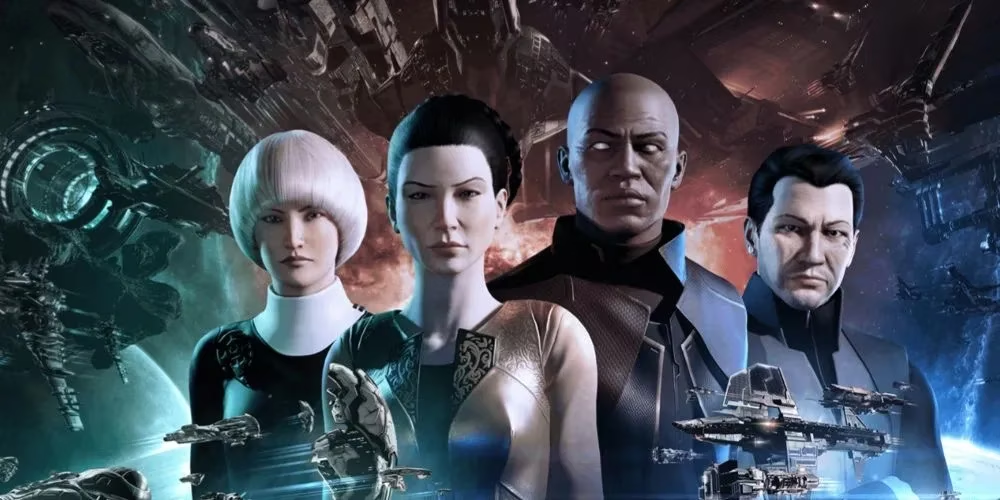
Finally, there’s Eve Online, the black hole that consumes lives. If you’ve never witnessed a thousand-player battle where alliances crumble and real money hangs in the balance, you’re missing out on something primal. In 2026, the game’s single-shard universe remains unmatched. My character trains skills even when I’m not subscribed—some paths take real years to master. The economy is so complex that analysts write quarterly reports on it. I’ve flown with a pirate corporation that extorted billions, then switched to a peaceful mining life, terrified that my past would catch up. It did, eventually, and losing a ship I’d named and customized over months was a gut punch. But Eve isn’t a game you win; it’s a universe you survive in, and every scar tells a story.
What ties all these titles together isn’t just technology. It’s the understanding that the best stories don’t come from scripted missions. They emerge from the persistent reality that your choices—and everyone else’s—are permanently etching themselves into a shared world. In 2026, that feeling is more alive than ever.