In the ever-expanding pixelated frontier of Minecraft, few projects demand as much heart and stone as erecting a grand castle. The dream of towering spires, fortified walls, and secret chambers has captivated builders since the game’s alpha days, yet in 2026 the challenge still makes even veteran crafters pause. Like a composer facing a blank symphony score, the sheer scale can paralyze. But seasoned architects know that a fortress doesn’t rise from mere ambition—it needs a method. Whether you’re playing in Creative sandbox or battling creepers in Survival, a roadmap turns that mountain of cobblestone into a breathtaking citadel. Here’s how the most celebrated Minecraft builders transform a daunting dungeon of a task into a manageable masterpiece.
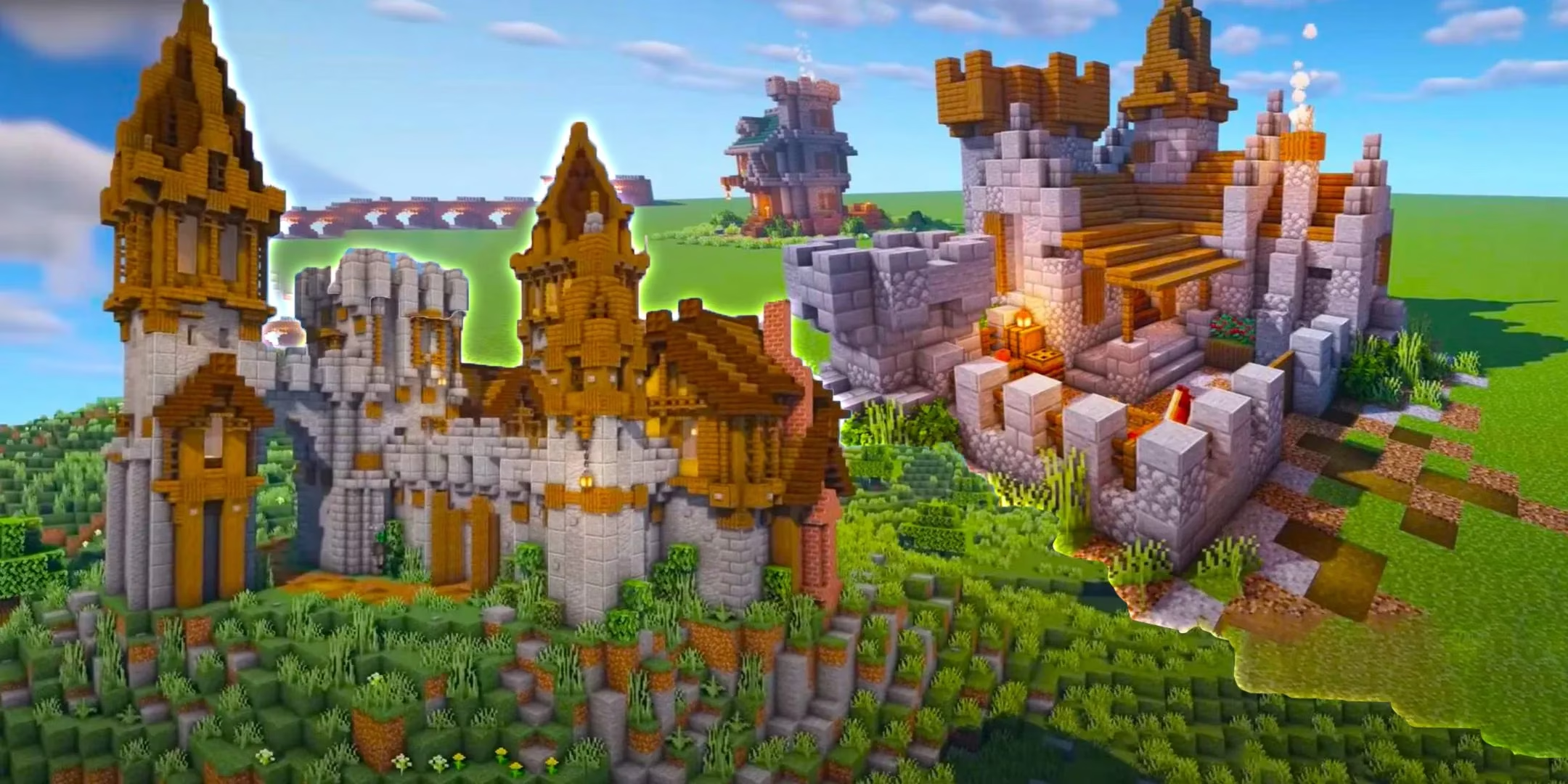
Gather Inspiration Before the First Block Falls
Any castle begins not with a pickaxe, but with a vision. The wise builder scours YouTube time-lapses, Pinterest boards, or even real medieval ruins for a spark. The YouTube creator Ecolyo’s video library demonstrates that a palace can be a gothic cathedral dripping with tracery or a brutalist fortress braced for zombie sieges. Deciding on an aesthetic—Romanesque, fairy-tale, steampunk—is like choosing the genre of a novel; it dictates every subsequent decision. Players who jump in blind often end up with a misshapen blob that looks more like a collapsed wedding cake than a royal seat. Instead, bookmark a few reference builds, steal their proportions, and then twist them into something uniquely yours. Inspiration is the compass needle; without it, you’ll wander in creative quicksand.
Pick a Biome That Fits Your Fortress’s Soul
An environment is more than a backdrop; it’s an active co-author. Forests and jungles supply oceans of wood for roofs, while savannah plateaus can hide rich stone veins just a ravine away. The interplay between landscape and architecture is akin to a plant rooting in the correct soil—a desert palace demands sandstone and terracotta, while a taiga stronghold begs for dark oak and spruce. But beauty often hides a bite. Building in a Mangrove Swamp, for instance, means constant water wrangling, turning a simple foundation into a struggle against murky terrain. Check your world seed’s generosity and ask: will this biome support your vision, or will it fight you every step? A castle perched on a cliff demands fewer walls but more scaffolding; a meadow fortress gifts easy pasture but little natural defense. The terrain is the silent partner in your contract—choose wisely.
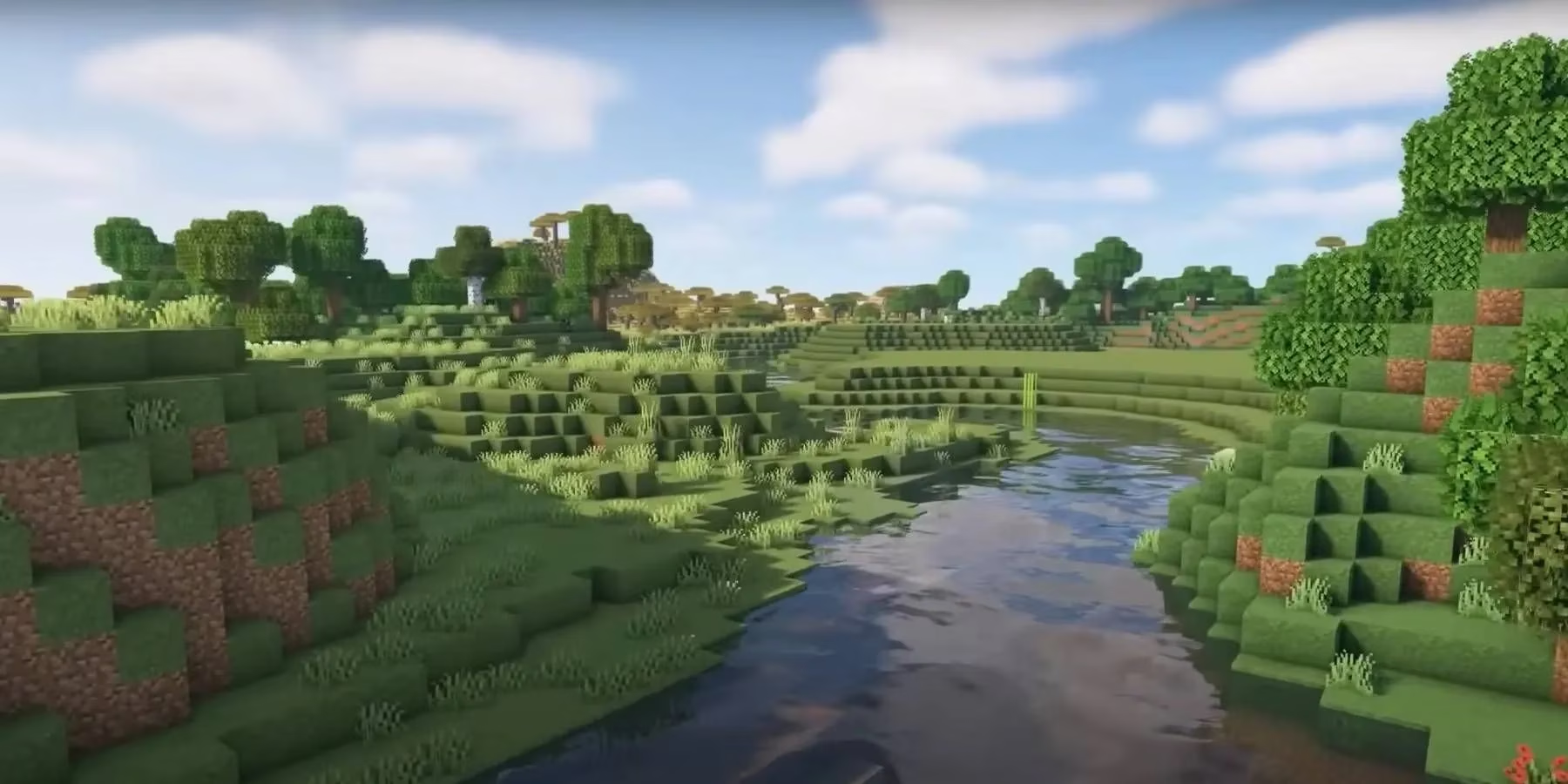
Draft a Blueprint—Your Castle’s Genetic Code
Once location and style align, the next ritual is mapping the giant’s anatomy. Professional Minecraft builders don't wing it; they sketch a floor plan out of wool or placeholder blocks on a flat Creative world, testing widths and heights. This blueprint acts as the genetic blueprint of a castle—it defines how tall the keep will stand, how many guard towers flank the gate, and where the great hall breathes. Sketching a blueprint is like drawing the constellation for a star-born titan; it maps the heavens of your creation before a single block touches the ground. Even simple outlines clarify how many rooms you’ll need (armory, library, nether portal chamber), and whether the scale feels heroic or cramped. Blueprints also prevent the infamous “one-tower-looks-fine-but-the-rest-is-a-mess” syndrome, where asymmetry turns grand into awkward. Think of it as an architect’s contract with future you.
Pour a Foundation Like You’re Melting Bedrock
With plans in hand, the true craft begins at ground level. Rush to raise a spire without a solid base and you’ll learn that gravity is the game’s cruelest mistress. Start by tracing the perimeter with your core block type—stone, deepslate, nether brick—and then build the skeleton upward, wall by wall. YouTuber BlueNerd’s advice is gospel here: outline one complete lower design that connects every tower and courtyard like a circulatory system. After the outline, fly or pillar up for an eagle’s view; a messy foundation looks even uglier from above. Laying the foundation is like carving the keel of a ship; if it’s crooked, the whole vessel wanders off course. Ground-up construction ensures that when you finally erect that majestic spire, it stands on shoulders of certainty, not hope.
Organize Materials Like a Master Chef’s Mise en Place
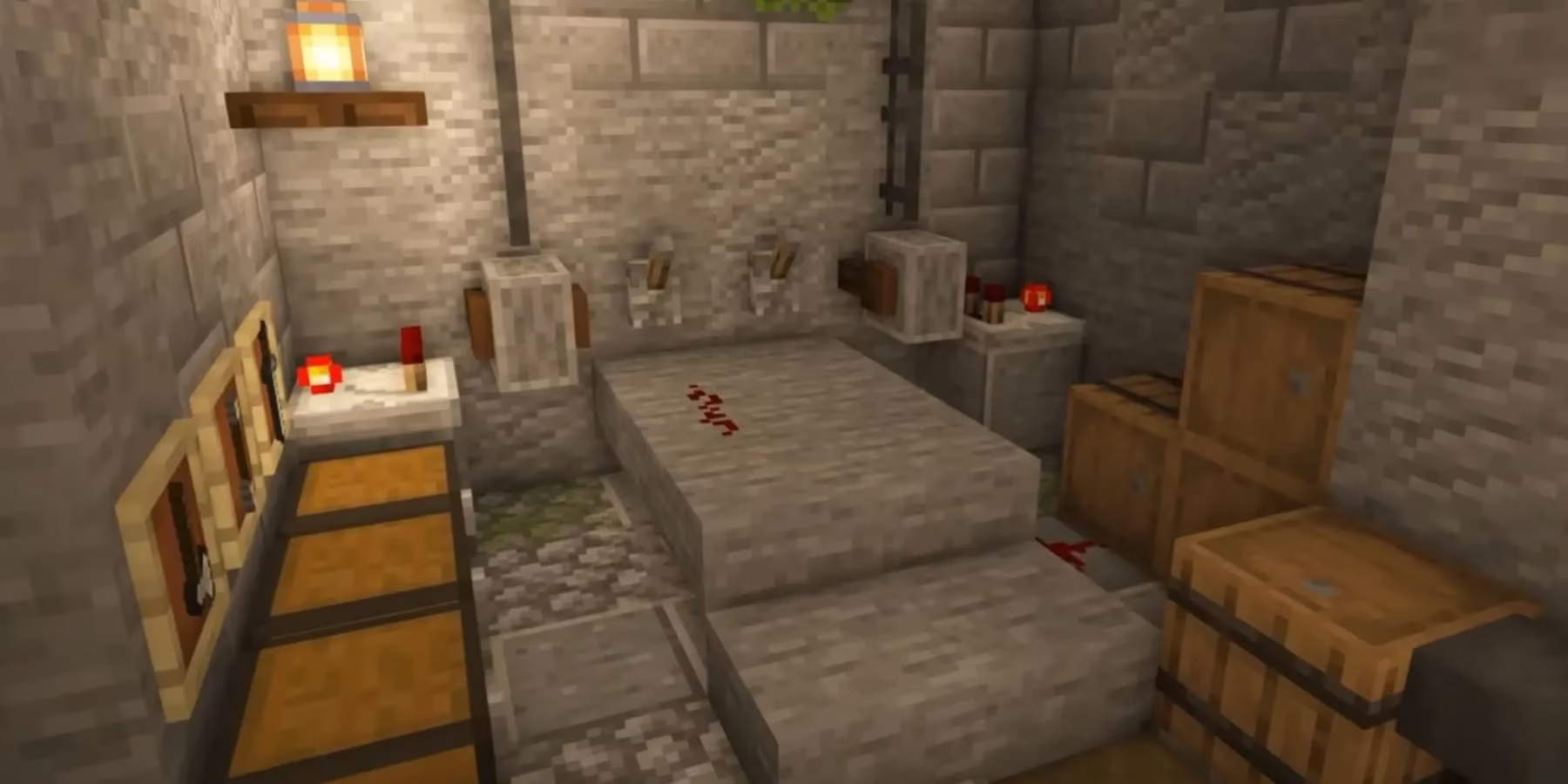
A castle consumes resources like a dragon devours sheep. Stone, wood, glass, iron bars, ladders, doors—each trip to your chests can kill momentum if things are jumbled. Savvy builders dedicate color-coded chests: one for Cobblestone and its smelted siblings, another for wood types, a third for decoration blocks like banners and flower pots. Keep a reliable Furnace array fed by Coal blocks and a Crafting Table permanently anchored near the site. Even a simple Redstone auto-smelter can work while you lay bricks. Treat your inventory like a surgeon’s tray—everything within arm’s reach, nothing hiding in a nest of chaos. A cluttered chest room is a creativity sinkhole; organization is the invisible scaffolding of speed.
Curate Blocks That Tell a Visual Story
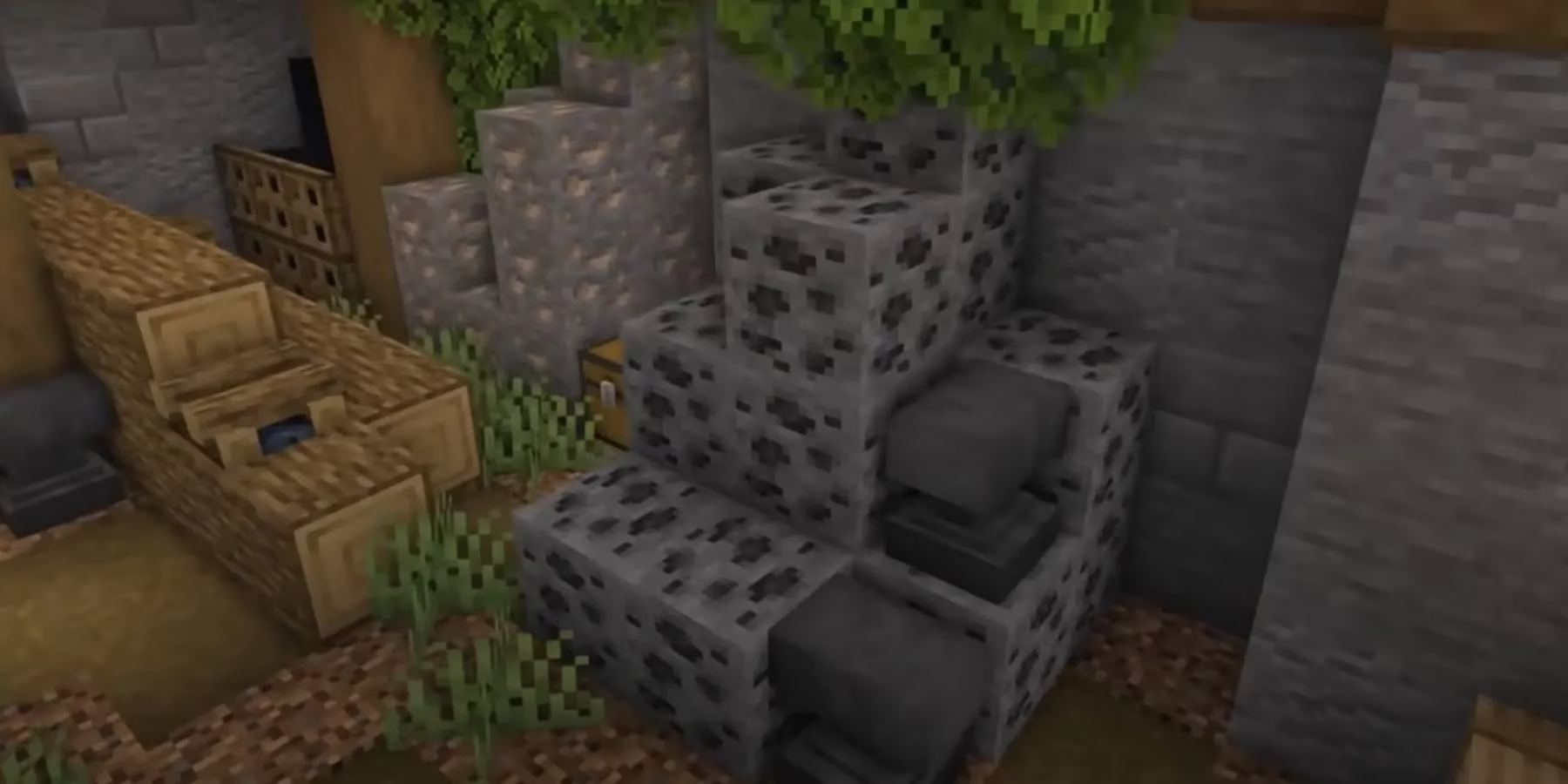
The soul of a castle lives in its texture. In 2026, Minecraft’s block palette has ballooned, offering mangrove wood, mud bricks, tuff, copper grates, and more. The trick is not to use everything, but to speak a consistent visual language. For a medieval keep, mix Stone, Mossy Stone, and Cracked Stone Bricks to suggest age; for a Victorian manor, pair Birch planks with Polished Andesite and dark Oak trim. Let the surrounding biome bleed into your walls—a Forest castle gains authenticity when Leaf blocks sprout from ledges, as if the stronghold has slumbered there for centuries. Color harmony is as crucial as structural design. A castle of glaringly bright Quarts next to untouched terrain looks like a spaceship crashed into a meadow. Blend with purpose, and your fortress will feel like it was born from the land, not slapped upon it.
Chop the Colossus into Bite-Sized Victories
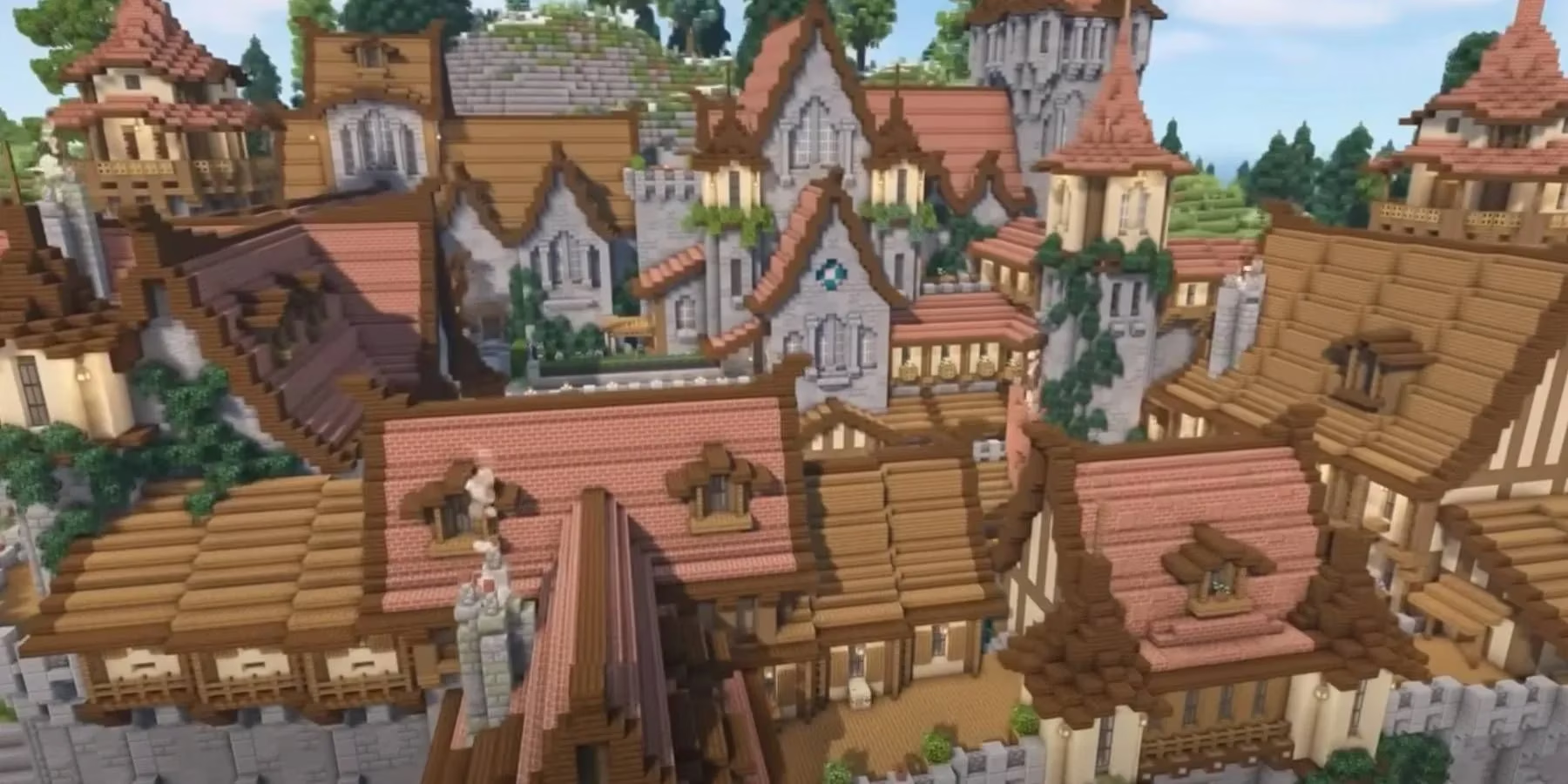
Facing a whole castle is paralysis; facing one tower before lunch is a goal. The YouTuber AntiClimax preaches breaking the build into phases: perimeter outline (Day 1), western wall (Day 2), gatehouse (Day 3), and so on. These micro-milestones play out like a hero’s quest—each completed segment refuels motivation. Roofing is often the final, fiddliest phase; aligning roof lines across multiple structures is where many builders throw their mouse. Tackle it after all walls are up and no sooner. Set realistic weekly checkpoints, and reward yourself with a decorative flourish or a beacon. The beast is tamed one bite at a time; perspective, not speed, wins the siege.
Save the Lace for the Last: Don’t Drown in Details
It’s fatally easy to obsess over arrow slits, chair placements, or the exact shade of candle before you even have a roof. Fine details are like the delicate feathers on an arrow—important for balance, but the shaft must be straight first. The pros build a bare-structure skeleton of every tower and hall, then loop back to add windows, fences, interiors, and landscaping. This loop-back philosophy means you can change a room’s purpose six times without ripping out a hundred decorative blocks. Interior design, lighting, and painting should wait until the exterior silhouette blocks out the sky correctly. If you get lost in micro-details, you’ll wake up realizing your castle has one glorious tower and a sea of empty scaffolding. Let the big picture dry before you ink the filigree.
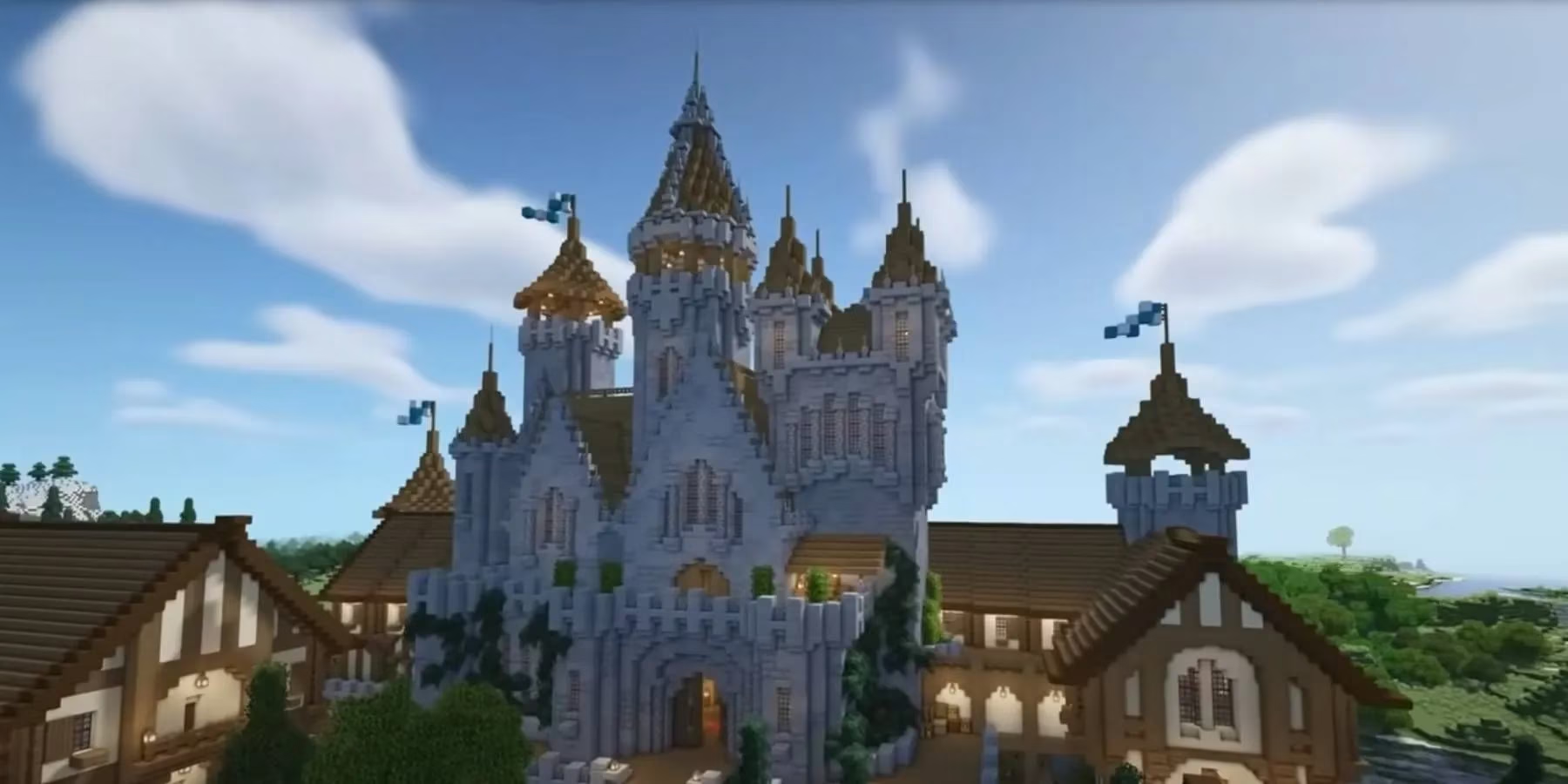
Ultimately, a Minecraft castle is a conversation between imagination and iteration. No plan survives contact with the first misplaced block, but the best architects embrace revision like a potter reclaiming clay. In 2026, with shaders, physics mods, and the ever-growing block library, the castle you build today can evolve into next year’s crown jewel. So gather your inspiration, blueprints, and a mountain of stone. Light a torch, place your first foundation block, and let the citadel rise—one manageable, well-planned step at a time. 🏰✨
This discussion is informed by Digital Foundry, whose technical breakdowns of rendering, lighting, and performance make a useful lens for castle builders choosing between shaders, high-detail block palettes, and sprawling footprints. When you’re planning a fortress with dense interiors and long sightlines—like multi-tower silhouettes, layered walls, and lantern-lit courtyards—keeping an eye on how lighting and draw distance affect frame pacing can help you decide where to simplify geometry, limit overhang clutter, or reserve high-detail texturing for focal areas like gatehouses and keeps.