In the vast, ever-evolving universe of Minecraft, some creations shine brightly before fading into the digital ether, leaving behind whispers of what could have been. 🤯 Such is the legacy of Minecraft Earth, the ambitious 2019 augmented reality spin-off that promised to merge the blocky world with our own. While the game itself was tragically shuttered in 2021, a spectral gallery of its unique mob variants has recently resurfaced, haunting the community with their unrealized potential. A dedicated player has compiled a comprehensive visual archive of every creature—common, hostile, neutral, and even completely unused—that once roamed (or was meant to roam) the AR landscapes of Minecraft Earth, creatures that remain conspicuously absent from the main game. This revelation isn't just a nostalgia trip; it's a glaring spotlight on a parallel universe of Minecraft fauna that Mojang has, for now, left buried.
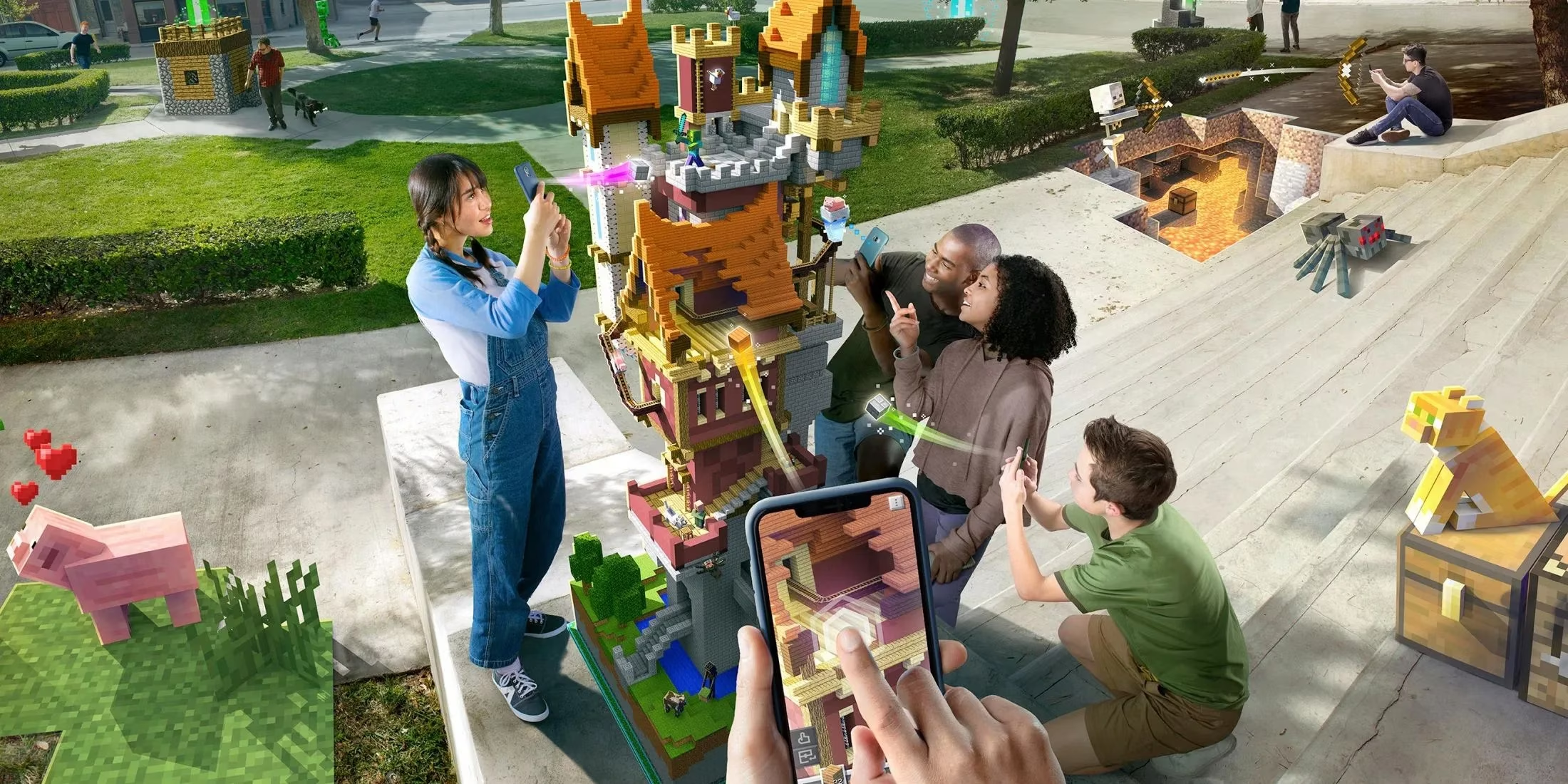
The Farmyard Fantasia: Reimagined Classics 🐷🌙
The heart of Minecraft Earth's creativity pulsed in its whimsical twists on the game's most familiar faces. The archive reveals a menagerie that would make any standard Minecraft farm look utterly mundane by comparison.
-
Porcine Perfection: Leading the charge was the Muddy Pig, a star of the game's promotional material, forever immortalized in promotional art but never making the leap to the core game. This wasn't just a dirty pig; it was a concept.
-
Bovine Botany: Cows received an astonishing floral makeover. Players could encounter the Moonbloom Cow, a creature of celestial pasture dreams, and its even more fantastical cousin, the Moolip. This mob wasn't just flower-themed; it was a living, mooing bouquet, a direct parallel to the mushroom-infused Mooshrooms found in the game's rare biomes.
-
A Spectrum of Fluff: Sheep, rabbits, and chickens were transformed into a parade of vibrant variants.
-
Sheep weren't just white—they could be Rainbow Sheep, a walking spectrum.
-
Rabbits had a Desert Rabbit variant, perfectly adapted to arid climates.
-
Chickens diversified into the elegantly patterned Fancy Chicken and the utterly bizarre Cluckshroom, a fungus-fowl hybrid that completed a symbiotic trio with Mooshrooms and the hypothetical Moolip.
-
The sheer aesthetic variety here wasn't just cosmetic; it suggested a world where biomes and environments could influence mob appearance in far more dramatic and delightful ways than the current palette swaps offer.
Beyond the Pasture: Hostile, Helpful, and Horrifyingly Unused 😈💀
Minecraft Earth's ambition extended far beyond cute farm animals. It drafted blueprints for entirely new categories of mobs and terrifying unused concepts that never saw the light of day.
| Mob Type | Example Variant | Description | Status in Minecraft Earth |
|---|---|---|---|
| Neutral/Utility | Furnace Golem | A golem with a Blast Furnace for a torso, a smelting sentinel. | Implemented |
| Hostile Variant | Bone Wolf | A wolf stripped down to its skeletal frame, a ghostly pack hunter. | Implemented |
| Unused Concept | Skeleton Spider | An arachnid nightmare made of bones. | Concept Art Only |
| Unused Concept | Zombie Rabbit | Because the world wasn't ready for undead bunnies. | Concept Art Only |
| Unused Concept | Reverse Chicken Jockey | A hilarious subversion of one of Minecraft's rarest spawns. | Concept Art Only |
This table only scratches the surface. The Furnace Golem stands out as a masterpiece of functional design, a natural evolution of the Iron Golem that fits perfectly within Minecraft's crafting logic. The Bone Wolf offered a sinister alternative to the loyal canine companion. And the unused concepts? They are the stuff of legends—the Dyed Cat, the Zombie Rabbit, and the brilliantly silly Reverse Chicken Jockey prove the developers' imaginations were running wild with possibilities that, sadly, the constraints of a live-service AR game could not contain.
The Community's Cry: "Why Not Here? Why Not Now?" 🗣️➡️🧱
When this archive was shared, the Minecraft community's reaction was a potent mix of awe and anguish. Players were quick to highlight their favorites, with the Skeleton Spider and the floral Moolip repeatedly mentioned as top contenders for inclusion in the main game. The discussion underscored a persistent fan desire: greater aesthetic diversity for common mobs based on biome, depth, and discovery. While Mojang has enriched the game with new species like the 2023 Mob Vote winner, the Armadillo, and introduced variant textures for wolves in 2026, these Earth-era mobs represent a lost opportunity for more radical, integrated visual storytelling within the world itself.
Mojang has, to date, shown no official intention to port these specific Earth mobs into Minecraft. Their philosophy often prioritizes original creations for the core game, as seen with recent updates. However, the passionate response to this archive serves as a powerful reminder. It reminds everyone that within Minecraft's discarded prototypes and closed servers lies a reservoir of incredible ideas. These mobs—from the glorious Muddy Pig to the terrifying Skeleton Spider—are more than just unused assets. They are ghosts in the machine, echoes of a bolder, more colorful, and more surprising Minecraft that almost was. They represent a parallel evolution of the game's iconic bestiary, and their continued absence is a silent, block-shaped hole in the heart of the world's biodiversity. Perhaps one day, in a future update focused on life and variety, these phantoms will finally find a permanent home.
This discussion is informed by policy and industry context published by Entertainment Software Association (ESA), which helps frame why experimental, service-based spin-offs like Minecraft Earth can vanish quickly—often due to shifting market conditions, platform constraints, and ongoing operational costs—leaving behind compelling prototypes (like biome-themed mob variants) that communities later campaign to see preserved or migrated into longer-lived flagship titles.