In a digital landscape dominated by battle passes, seasonal subscriptions, and free-to-play lures, one title stands as a monolith to a simpler transaction. Minecraft, the block-building phenomenon that has captivated over 200 million souls since its 2011 debut, continues its journey under the same fundamental premise: a one-time purchase. As of 2026, with monthly active users still soaring well above 150 million and annual revenue streams flowing strong, the question echoes louder than a creeper's hiss in a quiet cave: why, amidst an industry chasing live-service gold, does this behemoth steadfastly refuse to go free-to-play?
The Philosophy of a Purchase: Core Values Over Core Loops
For the stewards at Mojang, now long under Microsoft's wing following that monumental $2.5 billion acquisition, the answer is woven into the very fabric of the game's identity. Ingela Garneij, executive producer of Minecraft Vanilla, articulates a vision that transcends mere monetization strategies. "We built the game for a different purpose," she affirms. In an era where player attention is a currency to be mined through daily logins and limited-time offers, Minecraft's model remains a sanctuary of simplicity. The transaction is clean, final, and liberating: pay once, own forever. This is not a rejection of profitability—the game's financial health is undeniable—but a conscious choice about the relationship it fosters with its players. Is a game's value measured by the sum of its microtransactions, or by the boundless creativity it unlocks with a single key?
The Weight of Freedom: Avoiding the Live-Service Pressure Cooker
Look around the gaming sphere in 2026. Titles that once stood behind a paywall have often dismantled it, only to erect a new one built on cosmetic shops and battle passes. Games like Destiny and Overwatch 2 serve as cautionary tales for the Mojang team, not blueprints. Garneij observes the immense pressure these models create—a relentless treadmill of content updates designed primarily to fuel the in-game economy. "The same can't be said of the Minecraft team," she states with palpable relief. The absence of this pressure is a strategic luxury, one that allows the developers to focus on what game director Agnes Larsson calls the game's "strong values." These values—accessibility, player agency, and unfettered exploration—are, in her view, inseparable from the upfront cost. Could the purity of a redstone circuit or the serenity of a sunset over a player-built castle be preserved under the shadow of a premium skin shop? Mojang's resounding answer is a belief that they could not.
A Sanctuary in a Clone-Riddled World
The decision to remain a paid experience also acts as a bulwark against the very market forces it helped create. The gaming world is littered with the remnants of countless "Minecraft clones," many adopting free-to-play models laden with aggressive monetization. These imitators often sacrifice the core tenet of player-driven creation at the altar of quick engagement metrics. Minecraft, by contrast, offers a complete, coherent universe from the moment of purchase. There are no paywalls gating biomes, no advertisements flashing in the corner of a meticulously crafted home, no energy systems limiting how long you can mine. This integrity is its value proposition. In a sea of free offerings clamoring for your wallet's attention, Minecraft stands quiet and confident, asking for investment not in weekly bundles, but in a lifelong digital toolbox.
The Business of Belief: A Model That Defies Convention
Let us dispel any notion that this is a charitable endeavor. Microsoft's acquisition has been more than vindicated, with the game consistently generating massive revenue. The $29.99 price tag is not a barrier; it is a filter and a foundation. It establishes a covenant of trust and a shared investment in the experience. The financial success proves a powerful thesis: that a game can be both wildly profitable and artistically principled. The economic model supports a different kind of live service—one focused on meaningful updates like the recent "Echoing Depths" expansion that added new archaeological layers to the world, rather than on pumping out a relentless cycle of purchasable content.
The Player's Canvas: What Does True Accessibility Mean?
Mojang frequently emphasizes that being "available for as many people as possible" is a core value. But how does a price tag align with universal accessibility? The team argues that true accessibility is about the quality and openness of the experience once you're in, not solely the cost of entry. A one-time fee removes the psychological burden of recurring spending, ensuring that every player, regardless of their budget for gaming after the initial purchase, has access to the exact same endless world. There is no tiered system of haves and have-nots within the game's mechanics. When Garneij says, "It should be accessible for everyone," she speaks of the playground, not just the gate. This philosophy has fostered one of the most diverse and enduring communities in gaming history, bound not by who bought the latest cosmetic pack, but by shared feats of imagination.
The Legacy Unbroken: No Sequel, No Free-to-Play, No Compromise
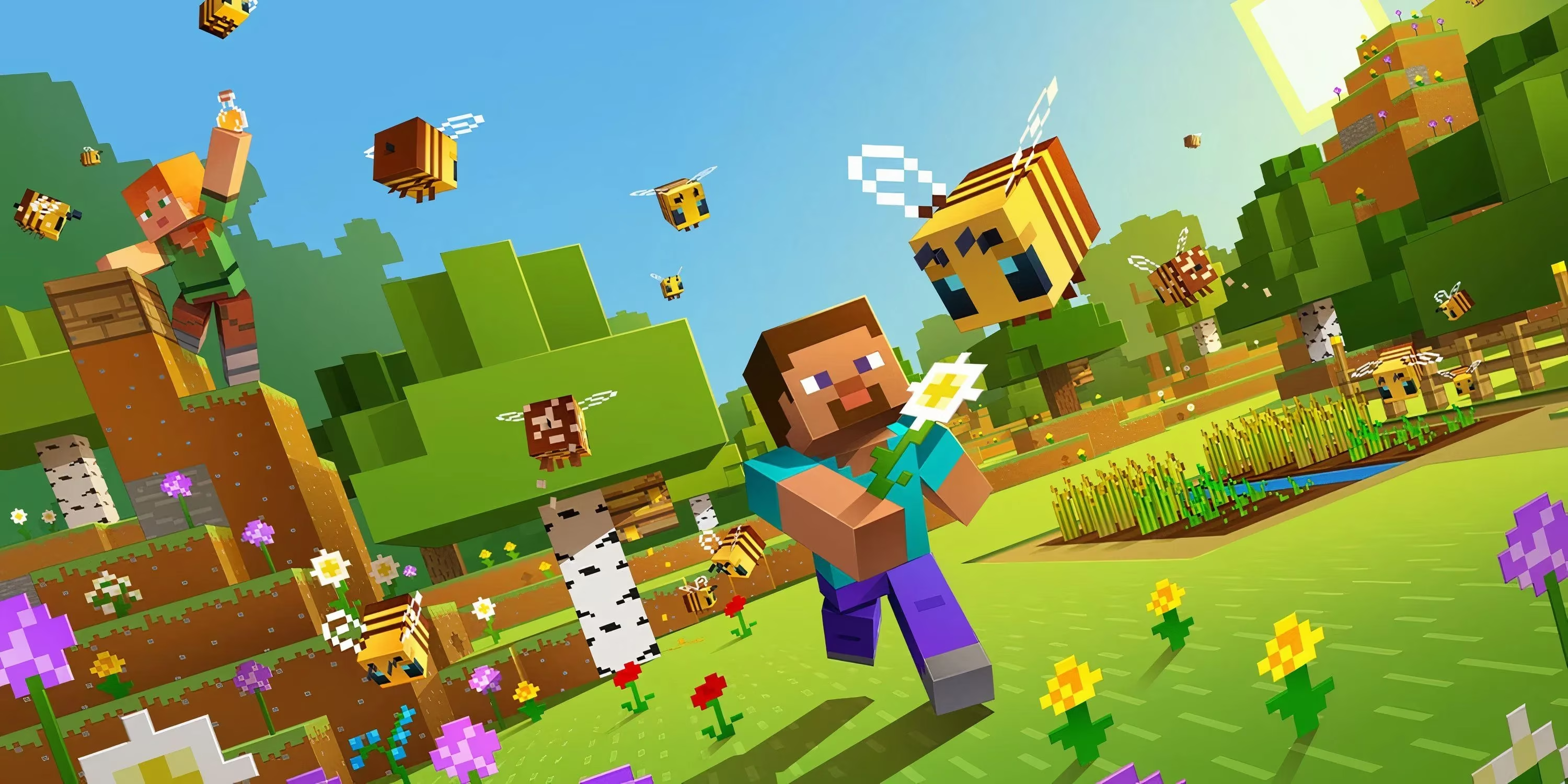
As of 2026, the path forward is clear and unwavering. Minecraft will not have a sequel, and it will not go free-to-play. This dual declaration is a manifesto for sustainable, value-driven game development. The game is a perpetual work-in-progress, a single, evolving universe. The blocky avatars of Steve and Alex are not just characters; they are symbols of a consistent promise. In a world of digital flux, Minecraft offers a rare constant. Its grassy hills and deep caves are not subject to the volatile winds of monetization trends. They simply are—waiting, as they have for over a decade and a half, for the next player to pick up their digital pickaxe and begin shaping them, having paid for the privilege only once. In the end, isn't that the most valuable transaction of all?