In the ever-evolving landscape of video games, few titles have demonstrated the enduring legacy of Minecraft. Originally launched in 2009, the block-building phenomenon has not only survived but thrived, transforming from a simple indie project into a cornerstone of gaming culture. While many players from its early years have wandered to other virtual worlds, the period following Microsoft's acquisition in late 2014 marked a significant turning point. The development pace, once considered stagnant, was reinvigorated, setting the stage for over a decade of consistent, major annual updates. As of 2026, with a history of transformative changes like the monumental Caves & Cliffs overhaul and the more recent Wild Update, the game presents a vastly richer and more complex universe than the one many veterans remember, making the present moment an unparalleled opportunity for a triumphant return.
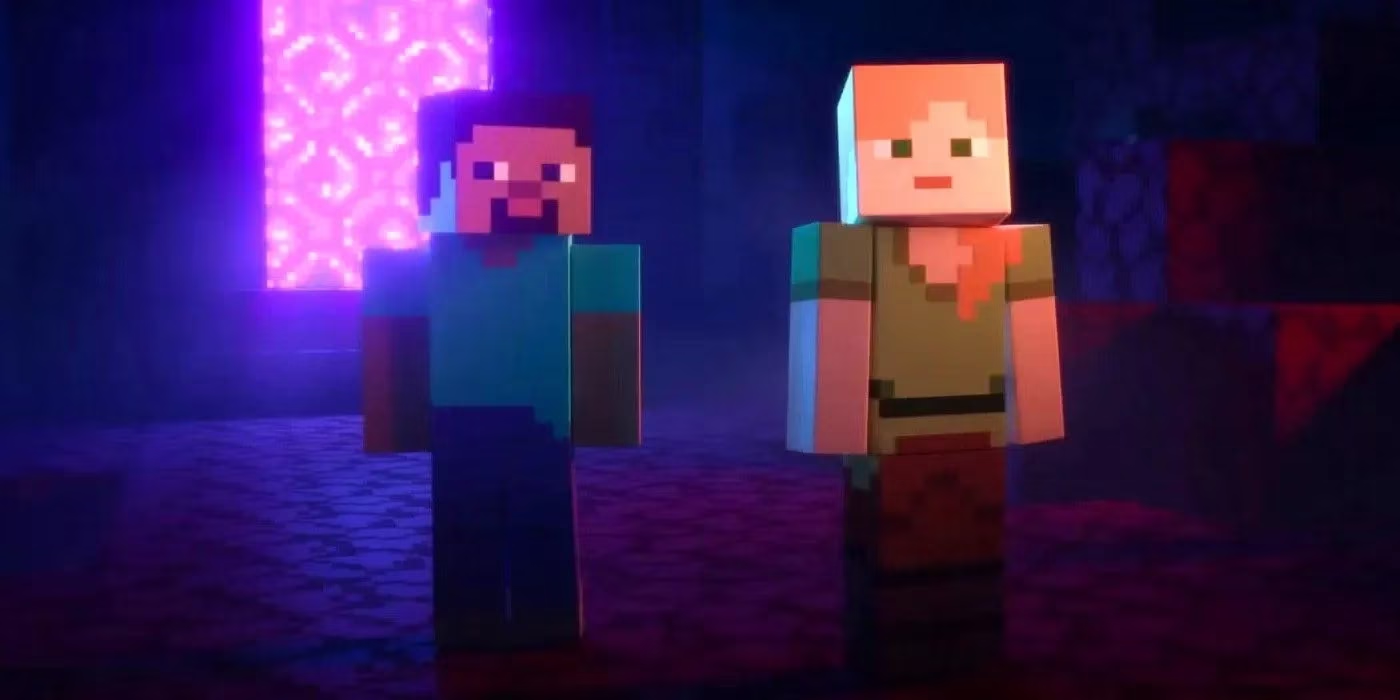
The Unstoppable Update Engine
Unlike most games that fade into obsolescence after a decade, Minecraft has defied convention through a relentless and structured update cycle. Mojang Studios has masterfully shifted the goalposts, treating the base game as a living platform. For years, the studio has delivered one to two major, game-altering updates annually, systematically incorporating features and concepts that were once the exclusive domain of the modding community. This steady cadence has slowly but surely bridged the historical gap between the official vanilla experience and the wild creativity of mods. The result is a core game that feels infinitely more expansive and polished, offering compelling reasons for lapsed players to rediscover the joy of mining and crafting in a world that now boasts breathtaking new biomes, terrifying new mobs like the Warden, and mysterious structures like the Ancient Cities.
Freedom Reimagined: Structure Within Sandbox
A common hurdle for new and returning players has always been Minecraft's sheer, overwhelming freedom. The game famously provides no quest log, no guiding NPCs, and no prescribed path to victory. This sandbox philosophy, while liberating, can also be paralyzing. However, the modern Minecraft experience has organically developed more implicit structure through its expanded content. The introduction of ambitious structures with unique loot, dangerous new biomes that demand preparation, and deeper progression systems for enchanting and exploration provide natural goals and milestones. Players are no longer just building a house to survive the night; they are embarking on expeditions to locate a Deep Dark city, braving the Nether's bastions, or cultivating an entire ecosystem of new frogs and mangrove trees introduced in recent updates. The freedom remains, but the world is now populated with more tangible reasons to explore it.
Peeking Behind the Curtain: The Snapshot Culture
One of the most unique and engaging aspects of modern Minecraft is its transparent development process. For years, Mojang has publicly released "snapshots"—preview builds of the next major update—almost weekly during active development cycles.
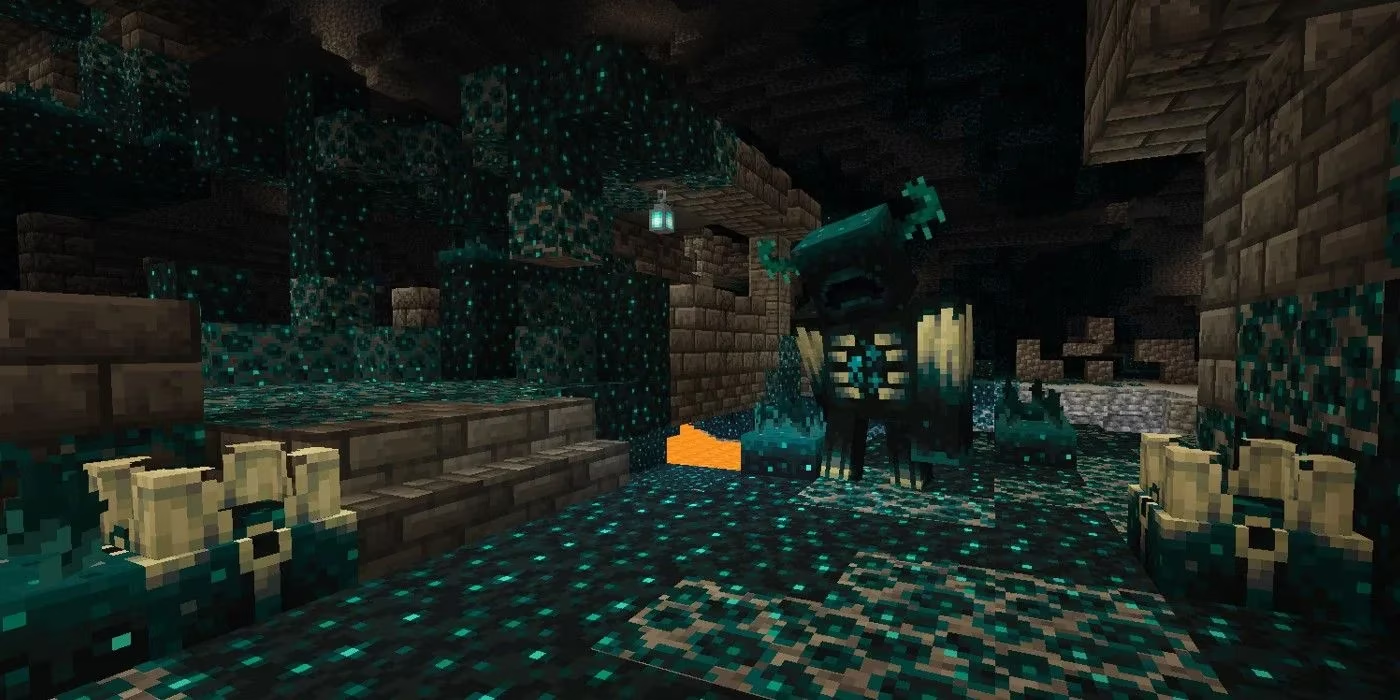
This practice does more than just tease upcoming features; it actively involves the community in the game's evolution. Players can download these snapshots directly from the official launcher, experiment with unfinished mechanics, and report bugs or provide feedback that genuinely shapes the final product. For a returning player, this is a thrilling way to re-engage. It offers a direct line to the game's future, allowing them to test-drive new biomes, items, and mobs months before official release. This sense of participation and agency—knowing your feedback on a snapshot feature might influence its final design—creates a powerful connection between the player and the evolving world of Minecraft, a feeling rarely found in other major game franchises.
The Infinite Canvas: Mods and Shaders in 2026
If the official updates form the sturdy trunk of the Minecraft tree, the modding community represents its vast, ever-blooming canopy. This ecosystem remains one of the most prolific in all of gaming. Mods in 2026 continue to perform minor miracles, capable of:
-
Adding Entire Game Systems: Introduce magic, advanced technology, or complex agriculture.
-
Creating New Dimensions: Explore realms beyond the Overworld, Nether, and End.
-
Overhauling Gameplay: Completely change combat, progression, or world generation.
While major game updates sometimes require modders to update their creations, tools and platforms have become incredibly robust, making mod management more accessible than ever. Alongside mods, shader packs have revolutionized the game's visual identity.
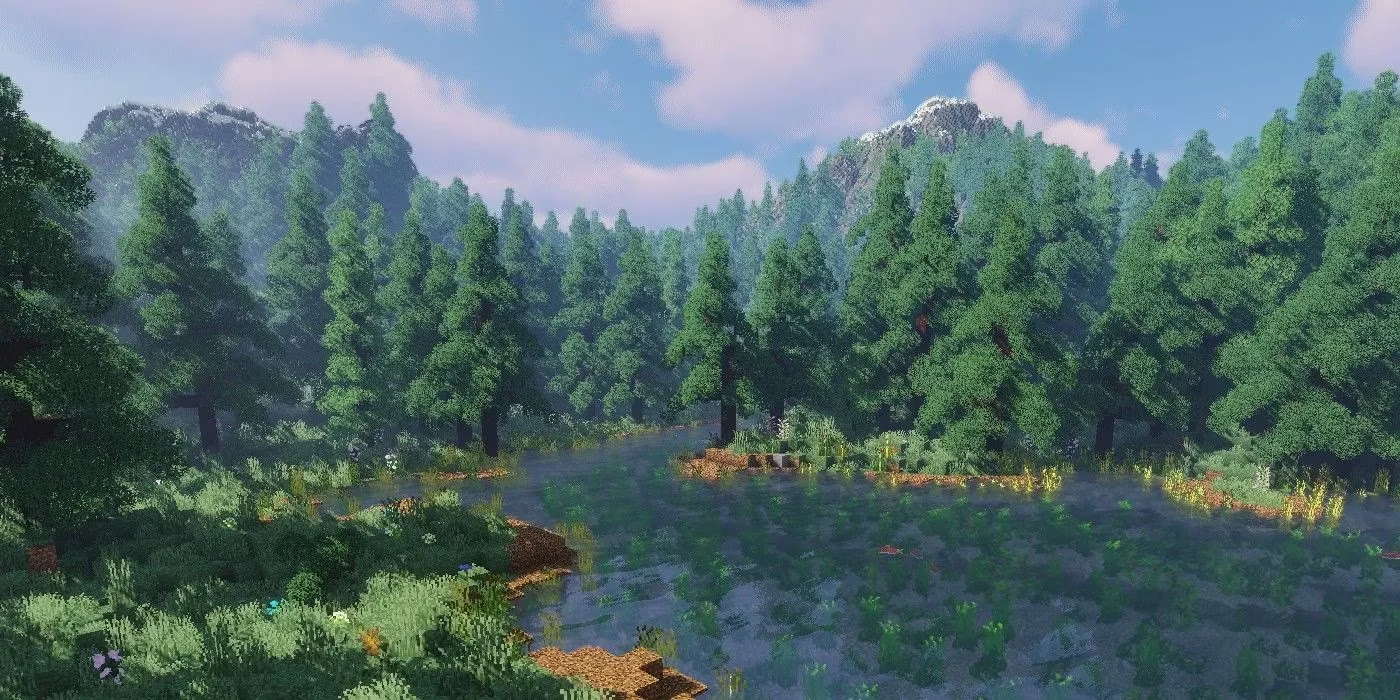
Modern shaders do far more than just add realistic sunlight and water; they can transform the game's atmosphere into anything from a hyper-realistic landscape to a vibrant, painterly dream. For a player returning after a long hiatus, applying a well-chosen shader pack is perhaps the single most dramatic way to make the familiar blocky world feel utterly new and awe-inspiring again. The combination of transformative mods and breathtaking shaders means that every player's Minecraft experience in 2026 can be a uniquely tailored adventure.
Why Now Is the Perfect Time to Return
The narrative of players drifting away from a game over time is universal, and Minecraft is no exception. Yet, its story is one of persistent renewal. Mojang's commitment to a yearly cycle of substantial, thematic updates (like the upcoming Ethereal Update rumored for late 2026) provides a constant influx of new content. Coupled with a modding scene of limitless creativity and visual tools that redefine the game's aesthetic, Minecraft in 2026 is not clinging to past glory—it is actively building upon it. The game world is deeper, more varied, and more beautiful. The community is more involved through snapshots. The tools for personalization are more powerful. For anyone who once lost themselves in its blocky realms, there has never been a better moment to log back in, feel the nostalgia, and then be utterly surprised by just how much that world has grown in their absence. The journey back to your first dirt hut is now a journey through a decade of innovation, waiting to be rediscovered.