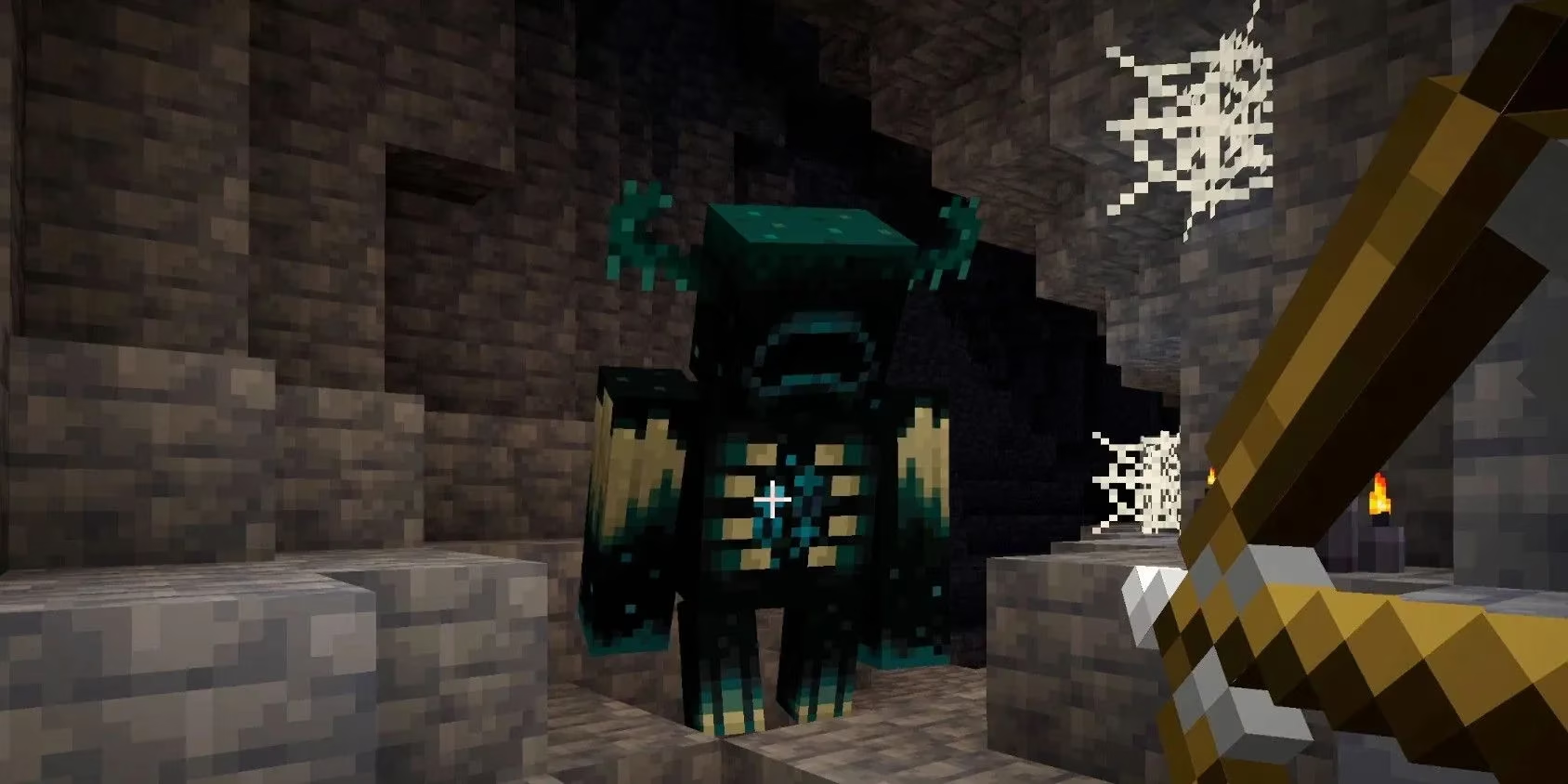
The landscape of Minecraft's most dangerous biome is about to undergo a seismic shift. Recent developments in the game's ongoing evolution have revealed that the Warden, already infamous as Minecraft's apex predator, is receiving a formidable upgrade that will force players to completely rethink their Deep Dark survival strategies. As of 2026, with the "The Wild" update now fully integrated into the game's ecosystem, the Warden's reputation as an unstoppable force has been solidified by the addition of a long-range sonic assault that penetrates solid barriers, turning traditional defensive tactics into relics of a bygone era.
The Evolution of a Nightmare
The Warden's transformation from a purely close-quarters menace to a hybrid threat represents one of the most significant gameplay adjustments in recent Minecraft history. Originally designed as the blind guardian of the Deep Dark biome, this mob relied on its acute senses of hearing and smell to detect player vibrations. Its devastating melee attack already dealt the highest consistent damage of any non-boss mob in the game, making direct confrontation a death sentence for even the most heavily armored players. The creature's introduction was like dropping a biological landmine into Minecraft's ecosystem—a dormant threat that could be triggered by the slightest misstep.
The Sonic Siege: A New Arsenal
The Warden's new ranged attack functions as a devastating sonic beam that emerges from its opening rib cage, reminiscent of a biological particle accelerator unleashing concentrated sound waves. This attack fundamentally changes the dynamics of Deep Dark encounters:
🔊 Attack Characteristics:
-
Wall Penetration: Can travel through solid blocks
-
Range: Significantly longer than melee distance
-
Trigger Conditions: Activates when players build high, hide behind walls, or move out of melee range
-
Visual Effect: A visible beam resembling a concentrated laser of sound energy
This development means that traditional "pillar up" or "wall off" strategies have become obsolete. The Warden's sonic attack cuts through conventional defenses like a geological scalpel through sedimentary rock, forcing players to develop entirely new survival methodologies.
Countermeasures and Survival Tactics
Despite the intimidating nature of this new attack, the Minecraft community has already begun developing counter-strategies. As demonstrated by players, shields can effectively block the sonic beam when properly timed, though this requires precise reflexes and positioning. The attack's introduction has sparked a renaissance in defensive gameplay innovation, with players experimenting with various materials and structures that might dampen or redirect the sonic energy.
🛡️ Effective Defense Strategies:
| Method | Effectiveness | Risk Level | Resource Cost |
|---|---|---|---|
| Shield Blocking | High (when timed correctly) | Medium | Low |
| Wool Insulation | Partial (vibration dampening) | Low-Medium | Medium |
| Mobility & Evasion | Variable (skill-dependent) | High | Low |
| Acoustic Baffling | Experimental | Unknown | High |
Biome-Wide Implications
The Warden's upgrade has sent ripples through the entire Deep Dark ecosystem, much like how the introduction of a new apex predator reshapes a natural habitat. Sculk sensors and shriekers now work in even more terrifying concert with their guardian, creating environmental puzzles that require both stealth and strategic combat. The update has introduced new achievements that reflect this changed reality:
🎯 New Challenges:
-
"When the Squad Hops into Town" - Leading all frog variants
-
"Sneak 100" - Passing Sculk Sensors or Wardens undetected
-
Implicit Challenge - Surviving a Warden encounter with its new sonic capabilities
Environmental interactions have also been refined, with materials like wool carpets providing better vibration dampening—a crucial consideration when navigating areas where the slightest sound could summon the sonic-equipped Warden.
The Future of Hostile Mobs
This enhancement to the Warden represents a philosophical shift in Minecraft's approach to hostile mob design. No longer are threats confined to specific engagement ranges or countered by simple environmental manipulation. The Warden now operates as a multi-spectrum predator, capable of adapting its hunting strategies to player behaviors. Its sonic attack functions like an auditory searchlight, sweeping through the darkness of its domain and leaving few places to hide.
As Minecraft continues to evolve beyond 2026, the Warden stands as a testament to the game's commitment to challenging, dynamic gameplay. Its dual-threat capability—devastating both at arm's length and across chambers—has raised the bar for what players must anticipate from future hostile mobs. The creature has become less of a simple enemy and more of an environmental force, a living embodiment of the Deep Dark's inherent danger.
Community Adaptation and Meta Shifts
The Minecraft player base has responded to this challenge with characteristic creativity. Speedrunners are developing new Deep Dark traversal routes, redstone engineers are designing specialized Warden-deterrent systems, and survival specialists are publishing guides on sonic attack patterns and evasion techniques. The Warden's upgrade has effectively created a new sub-genre of Minecraft gameplay focused on acoustic stealth and strategic engagement.
This evolutionary step for the Warden ensures that the Deep Dark remains one of Minecraft's most thrilling—and terrifying—biomes. Its sonic attack has transformed encounters from simple combat scenarios into complex puzzles of positioning, timing, and resource management. As players continue to explore the limits of this new threat, one thing remains certain: in the echoing chambers of the Deep Dark, silence is no longer just golden—it's essential for survival.