In the ever-evolving landscape of video games, certain titles fade from digital storefronts but never truly disappear from the collective memory of their players. Minecraft: Story Mode stands as a poignant example—a narrative-driven adventure that, despite its official discontinuation years ago, continues to spark passionate discussion and nostalgia within the gaming community. Its servers were shut down by Telltale Games in mid-2019, and its subsequent removal from Netflix in late 2022 seemed to seal its fate. Yet, like a stubborn seed growing in the cracks of forgotten code, its legacy persists, fueled by fan projects, social media resurgences, and a growing sentiment that this chapter of Minecraft history was unfairly judged.
The game faced significant criticism during its active years. Many dismissed it as one of Telltale's weaker entries, criticizing its departure from the open-ended sandbox of the original Minecraft and its perceived simplicity compared to the developer's more mature series like The Walking Dead. However, this critique often overlooked the game's core audience and purpose. Crafting a story for Minecraft, a universe with a fanbase heavily comprised of younger players, required a different approach. Telltale wasn't building a monument; they were weaving a tapestry, using the familiar threads of the blocky world to create a structured, character-driven tale. In this, they succeeded remarkably, producing what many now argue remains the best official narrative set in the Minecraft universe.
Telltale's Masterful World-Building: Lore Without Disruption
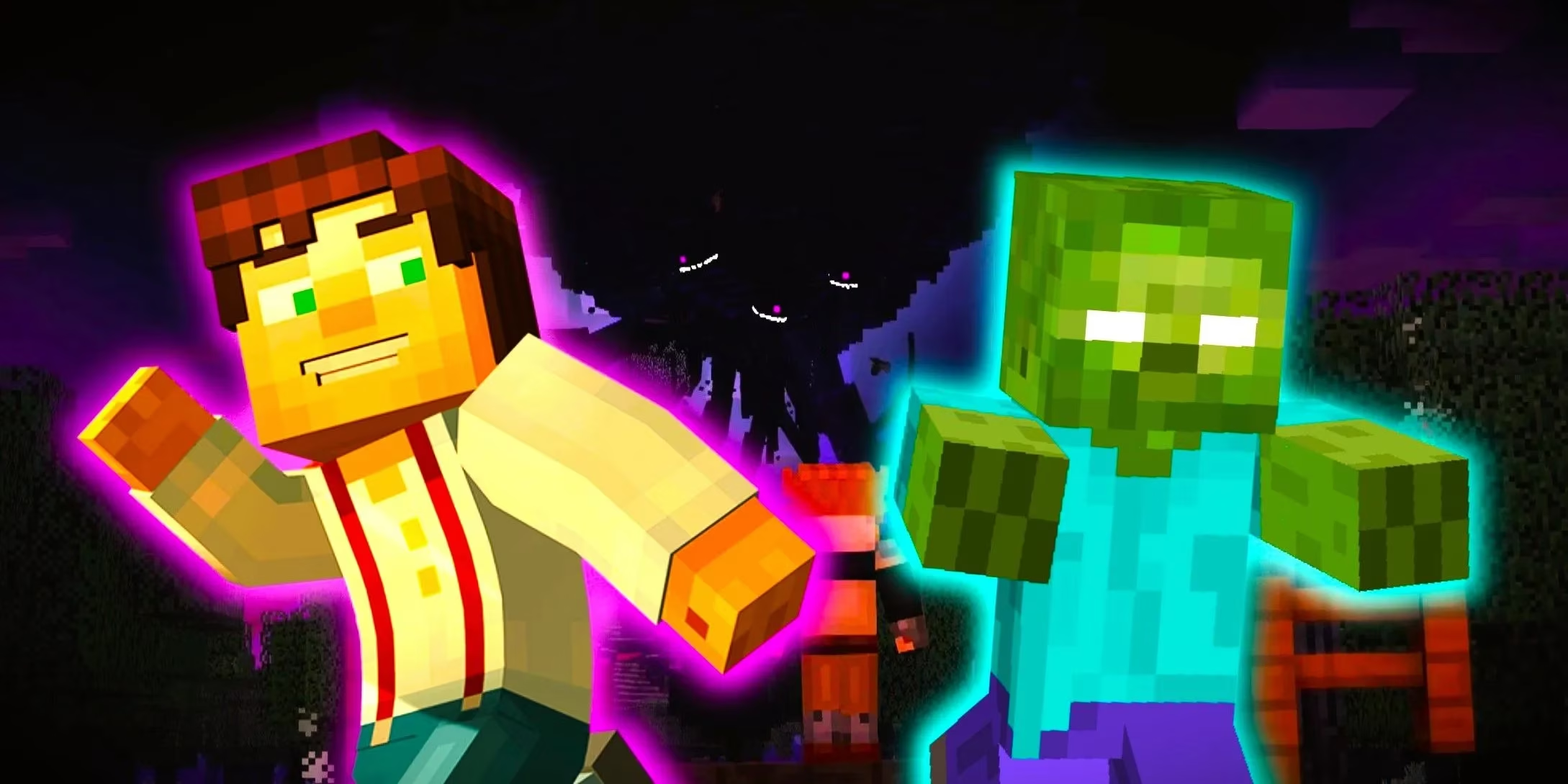
One of Story Mode's greatest triumphs was its ability to introduce substantial lore while feeling utterly authentic to Minecraft's setting. The game possessed a defined plot—a rarity in the sandbox original—yet it never felt forced or alien. Telltale expertly interpreted how communities and individuals would function in this world. Locations like Beacon Town felt like natural extensions of player-built hubs, and the integration of core gameplay mechanics, such as crafting at key story moments, was seamless. The developers understood that both the player and the protagonist, Jesse, were already veterans of this world; there was no need for clumsy tutorials. The world was presented not as a foreign land to be explained, but as a home with new stories to uncover.
The game's central antagonist, the Wither Storm, exemplifies this creative synthesis. Telltale took the familiar, formidable Wither boss and mutated it into a cosmic-scale threat, a galactic leviathan consuming worlds like a black hole devours light. Initially met with mixed reactions, the Wither Storm has since been re-evaluated as a uniquely engaging villain. Its haunting theme song experiences periodic viral resurgences on platforms like TikTok, acting as a sonic time capsule that instantly transports fans back to the game's tense climaxes. This creature represented a novel problem for players to solve, all while operating within the beloved, blocky aesthetic they knew.
Characters That Carved Their Names in Memory
If the world was the stage, the characters were the undeniable stars. Minecraft: Story Mode featured a cast that felt archetypal yet deeply personal, seemingly modeled after different player archetypes. Olivia the Redstone engineer, Axel the boisterous griefer, and Petra the brave explorer—each resonated because they reflected facets of the community itself.
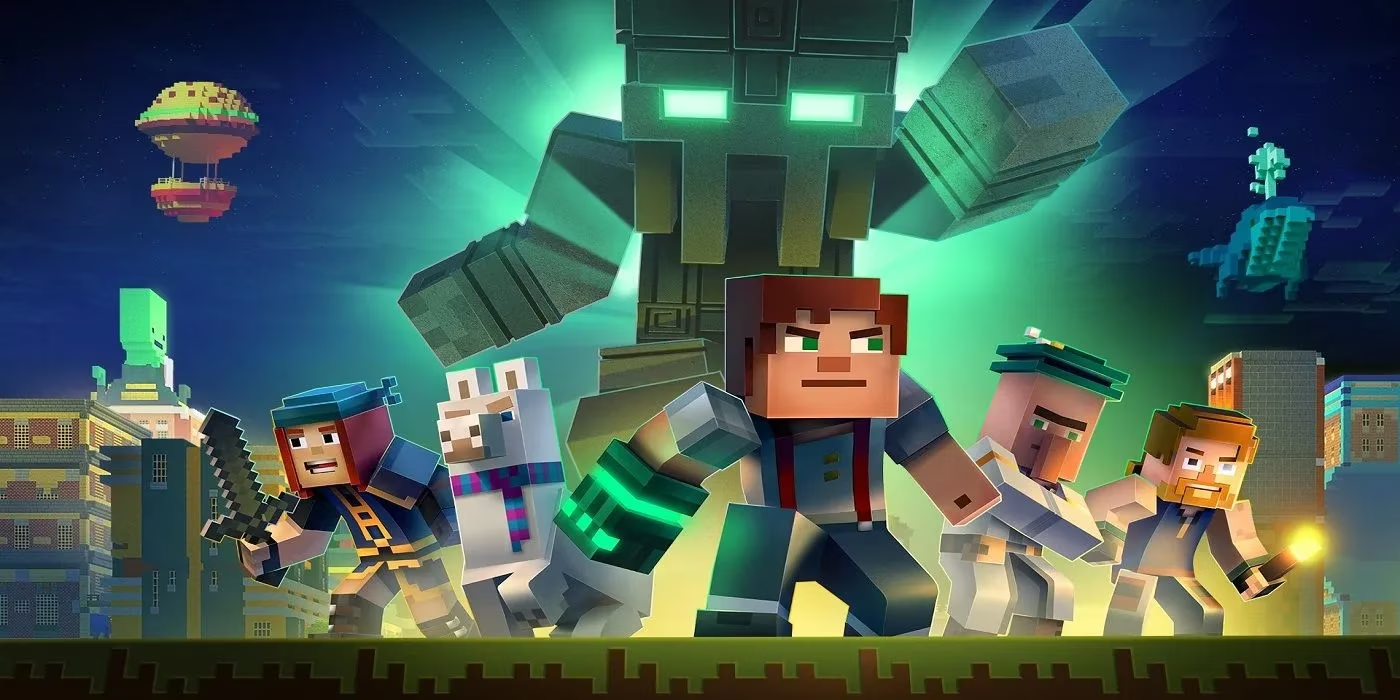
The narrative's "choose-your-own-adventure" structure was pivotal. It transformed players from passive observers into active participants, making them feel their decisions genuinely shaped the lives around them. This is evidenced by enduring community rankings, where characters central to major branching choices, like Petra and the warrior Gabriel, are consistently rated highly. However, the most beloved figures often turned out to be the redeemers: Ivor and Lukas. Starting as antagonists in Season 1, their arcs toward redemption were handled with care, allowing players to witness and influence their integration into the core group. Their journeys felt earned and deeply satisfying.
Yet, no discussion of the cast is complete without mentioning Reuben. The death of Jesse's loyal pig companion remains, years later, a cultural scar tissue for a generation of players—a moment of childhood media that proved stories in this blocky world could carry profound emotional weight. This enduring attachment to the characters underscores a simple truth: a game doesn't need to be mechanically revolutionary to leave an indelible mark on the heart.
The Player as Protagonist: Telltale's Signature Craft
At its core, Minecraft: Story Mode was a masterclass in Telltale's signature interactive storytelling. While players controlled the defined character of Jesse, the abundance of dialogue and narrative choices allowed for significant personalization. Players love agency, and the game delivered by ensuring that actions had direct, often immediate, consequences on relationships and story beats. Two players could walk away with fundamentally different impressions of the same character based on their choices, creating a personalized story within a fixed framework.
Preserving Minecraft's signature open-world freedom in a linear narrative game would have been a Herculean task, likely outside Telltale's design philosophy. Instead, they channeled that spirit of agency into the narrative itself. The game served as a perfect gateway into interactive story games, especially for the younger Minecraft audience. It proved that even in a world of infinite creativity, a well-told, player-influenced story has immense value.
A Legacy Cemented in Absence
As of 2026, Minecraft: Story Mode exists primarily in memory and through the efforts of its dedicated fanbase. The excitement surrounding fan projects, like Wazzy's animated rendition trailer, and the nostalgic discussions sparked by new Minecraft media, highlight a community that hasn't moved on. Thousands in comment sections express a collective longing, admitting they miss the game. Its unavailability has, ironically, crystallized its virtues.
Telltale was tasked with an impossible mandate: please the vast, diverse Minecraft fandom with a single story. It was inevitable that some would find it too simplistic or too constrained. Yet, with the passage of time, the criticism has softened, revealing the solid craftsmanship beneath. The game successfully translated the essence of Minecraft—community, creativity, and adventure—into a compelling, character-driven saga. It provided a shared narrative experience for a game famously about individual creation.
In its absence, Minecraft: Story Mode has achieved a kind of poetic status. Its themes of impermanence—that "nothing built can last forever"—now mirror its own fate. While new players may never officially experience Jesse's journey, the game's impact endures. It stands as a testament to a specific moment in gaming, a beloved experiment that, far from deserving the hate it once received, actually deserves a fond and respectful reconsideration as a unique and heartfelt chapter in the endless story of Minecraft.