It’s 2026, and if there’s one thing that still baffles dedicated Minecraft players, it’s the quiet existence of a mechanic that has been hiding in plain sight for over a decade. While builders and redstone engineers continue to push the sandbox to its limits, combat enthusiasts have spent years debating how Mojang could breathe new life into swordplay without compromising Minecraft’s blocky soul. And the answer might be something already woven into the game’s code: the creature type system. You know, that almost invisible classification that separates zombies from spiders, and determines whether your sword’s enchantment actually does anything extra. But what if this overlooked detail became a full-blown pillar of combat strategy?
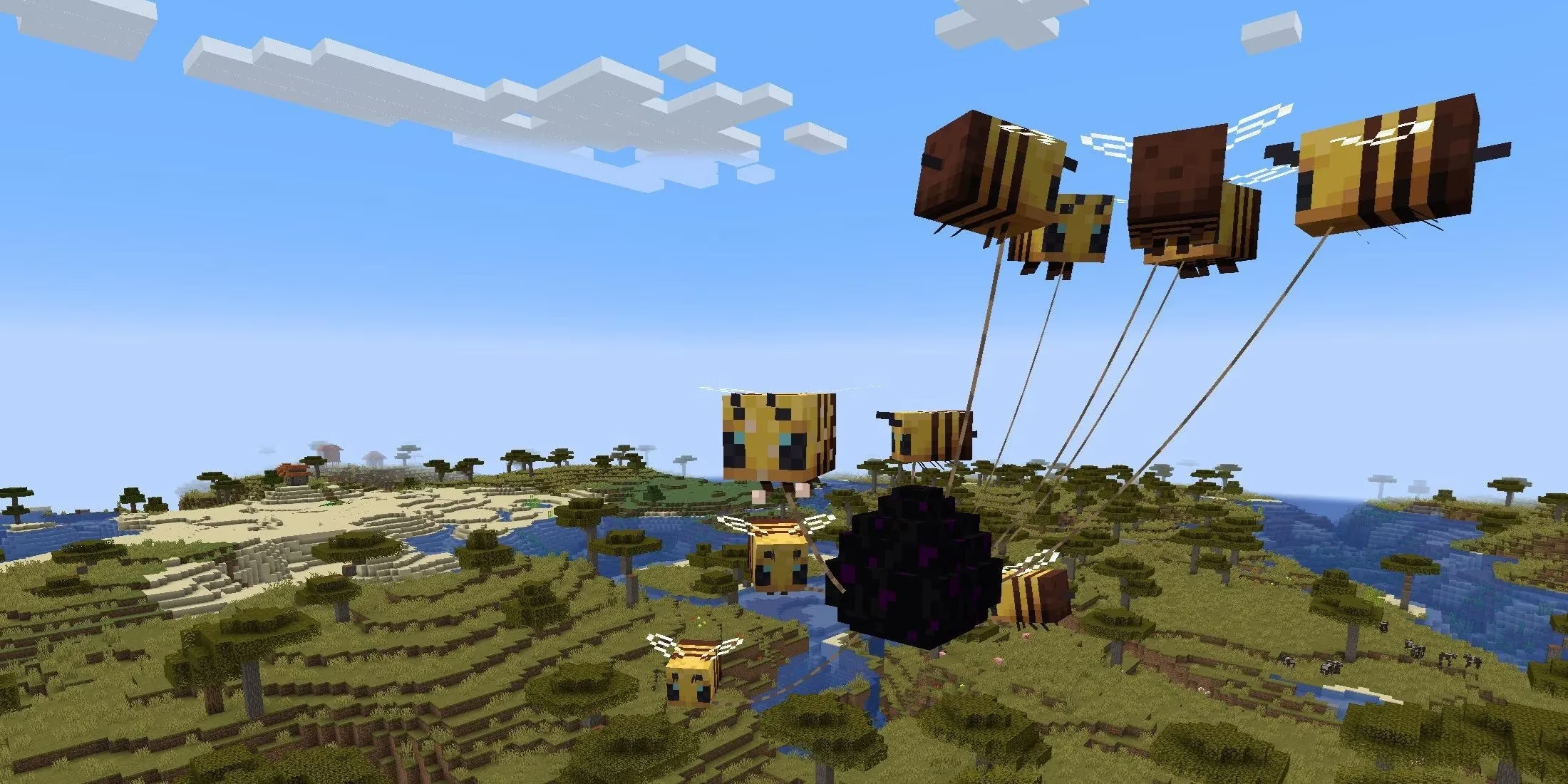
For years, Minecraft has quietly divided its mobs into a few broad buckets: undead, arthropods, aquatic, and a massive catch-all group that simply doesn’t fit anywhere. These categories are most visible through three enchantments – Smite, Bane of Arthropods, and Impaling – each designed to deal extra damage to a specific type. Yet ask most players which one they’d apply to their netherite sword, and the answer is almost always “none, I’ll stick with Sharpness.” That’s a shame, because a deeper, more consistent creature type system could transform how we approach every caving expedition, nether fortress raid, or ocean monument assault.
🧟 The Undead: A Gold Standard Nobody Talks About
Let’s give credit where it’s due: the undead category is by far the most cohesive piece of this hidden framework. Zombies, skeletons, wither skeletons, the wither itself, phantoms, drowned – they all share a common set of rules. Smite scales beautifully across early, mid, and late game because undead mobs are everywhere and include some of Minecraft’s toughest challenges. The towering wither, for instance, is a boss that feels specifically designed to justify spending a diamond on Smite V, and the wither skeleton grind only reinforces that value.
What makes the undead cluster so elegant isn’t just the number of mobs; it’s the consistent behavior. Every single undead creature heals from harm potions and takes damage from healing potions. Sunlight burns most of them. Totems of undying resist their attacks, while they themselves are immune to regeneration effects normally. This internal logic rewards players who pay attention, turning what could have been a random collection of spooky mobs into a learnable family of foes.
The lesson here is simple: creature types work best when they have broad membership and clear, shared mechanics beyond just an enchantment label.
🕷️ The Underdogs: Arthropods and Aquatics Left Behind
Now, let’s look at the other two named groups. Bane of Arthropods applies to spiders, cave spiders, silverfish, endermites, and bees. On paper, that’s five mobs. In practice, only spiders have enough health (16 hp) to make the enchantment feel remotely justified, and even then a zombie has 20 hp and is far more common. Silverfish and endermites are more annoyance than threat, and bees are neutral pacifists no sane player wants to harm. The result? Bane of Arthropods collects dust in enchanting tables.
Impaling fares slightly better, but only because of the elder guardian and the trident’s inherent scarcity on Java Edition. Drowned, guardians, squids, turtles, and all fish variants are affected, yet the aquatic category lacks the everyday prevalence that makes Smite so practical. Plus, many of these mobs are tied to specific biomes, shrinking the enchantment’s usefulness outside deliberate underwater adventures.
Here’s a quick comparison to show just how lopsided the current system feels:
| Creature Type | Key Enchantment | Number of Mobs* | Boss-tier Member | Unique Shared Trait |
|---|---|---|---|---|
| Undead | Smite | 15+ | Wither | Yes (healing/harm reversal) |
| Arthropod | Bane of Arthropods | 5 | None | Minimal, situational |
| Aquatic | Impaling | 7+ | Elder Guardian | No consistent mechanic |
*Counts are approximate and exclude variants like baby zombies or tropical fish subtypes.
🧩 Consistency Is the Key to Unlocking Potential
The biggest opportunity for Mojang in 2026 is to make creature types consistent across the entire bestiary. Right now, mobs like creepers, piglins, ghasts, blazes, and endermen have no clear classification. Are creepers plants? Constructs? Nothing at all? Giving every mob a logical type would immediately improve immersion and smooth out the world’s internal rules.
Imagine if piglins and hoglins were tagged as “nether beasts,” and a new enchantment called “Bane of the Nether” gave bonus damage against them – suddenly, exploring bastion remnants becomes a deliberate gear choice. Creepers could fall under a “cave dweller” or “organic” type that interacts differently with explosions or redstone. Blazes and magma cubes might join a “fiery” category, vulnerable to water-based effects and specific potion interactions. These labels don’t need complex systems behind them; just having a tag that enchantments and potions can reference would open up design space enormously.
But consistency goes further. If every group had a signature mechanic – just like undead and the healing reversal – players could learn to exploit those rules across the entire game. For instance:
-
Arthropods could be universally slower in water or susceptible to lingering potions that represent insecticide.
-
Nether mobs could take extra damage from smite-adjacent fire-quenching items or become disoriented by packed ice.
-
Aquatic mobs might be highly vulnerable to lightning, making Channeling tridents into an entire playstyle.
These quirks wouldn’t require a combat overhaul; they’d fit Minecraft’s style of emergent discovery perfectly.
🔮 Beyond Enchantments: Potions, Items, and Bosses
Expanding creature types shouldn’t stop at swords. The real magic happens when players are given temporary tools to counter specific threats. Picture a brewer concocting a “Venomward Brew” from fermented spider eyes and turtle scutes that reduces damage taken from arthropods. Or a wandering trader offering a rare “Aquatic Incense” that pacifies fish-type mobs – useful for building underwater without constant guardian harassment. Such consumables would make creature type knowledge useful even without an enchanted weapon, encouraging preparation without forcing players into one enchantment loadout.
Then there are bosses. The wither single-handedly validates Smite because it’s a terrifying, high-stakes fight where every damage point matters. Bane of Arthropods desperately needs its own version of that. A colossal, ancient spider boss hidden in a new jungle or underground structure – with unique poisonous webs, minion summons, and treasure that only drops on death – would instantly rehabilitate the neglected enchantment. Suddenly, you’d see players seeking out Bane of Arthropods V not because it’s mathematically optimal, but because they’re preparing for a legendary encounter.
Similarly, an oceanic leviathan (think giant squid or sea serpent) could make Impaling a must-have for deep-sea expeditions. The beast could drop materials for a new “tide-forged” armor trim or a weapon that boosts aquatic combat, creating a satisfying loop of specialization.
Let’s not forget shields and armor. What if enchantments like “Creeping Ward” reduced knockback from creeper blasts, or “Piglin’s Bane” caused nearby adult piglins to briefly panic? The possibilities are as blocky as the imagination allows.
🧠 A System That Teaches Without Tutorials
One of Minecraft’s greatest strengths is its wordless teaching. When a player dies to a zombie and then sees a potion of harming heal a skeleton, they learn without a pop-up. A fully fleshed-out creature type system would double down on that silent education. A newcomer who notices that all spiders flee from fire, or that drowned take extra damage from a trident with Impaling, is absorbing game logic organically. The world becomes a puzzle, not a spreadsheet.
Even in 2026, with massive modding communities and data packs, the vanilla game thrives on intuitive rules. By giving every oddball mob a place in the creature family tree – and, crucially, letting players interact with that taxonomy through enchantments, potions, and environmental effects – Mojang could revitalize combat without betraying the sandbox spirit.
Yes, at its heart Minecraft is about placing blocks and going on adventures. But adventures feel more rewarding when the foes you face have depth beyond hitpoints and attack damage. The undead already get that depth. It’s high time for spiders, fish, piglins, and all the untyped weirdos to join the party. Who knows? Maybe the next combat snapshot will surprise us all with a creature type you’d never expect. Until then, player discussions about creepers’ secret category will keep lighting up forums – just as they have for the past decade.